| | Forum for Climate and Global Change (ProClim)
ProClim Briefing No 7
04.08.25 | |
|
|
|
| | Fabienne Frey,
editorial staff member at ProClim | | | |
|
| | | Hello Swimming, sunbathing, and more swimming – I thoroughly enjoyed my June vacation. But the water wasn't really cooling anymore, and the ice cream melted a little too quickly. Such midsummer conditions are unusual for the month of June, as scientific data now clearly shows. In our climate news section, you can read about the records set by the June heatwave in Europe's air and waters – and learn that such heatwaves are becoming more frequent. This section also offers a glimpse into the future of Swiss rivers: researchers at Eawag and the University of Basel have calculated how much the rivers will warm up by the end of this century. We wondered what the higher temperatures mean for the cooling of nuclear power plants in Switzerland and knocked on Regina Betz's door. She is co-author of a recently published report by the Energy Commission that has been the subject of intense media discussion. In the interview, Regina Betz assesses the future use of nuclear energy in the context of climate change and the achievement of net zero targets. As you can see, there is plenty of reading material for the relaxing days at your local river or lake. Personally, I am back at my desk feeling well rested and very excited to communicate the scientific findings on climate change as a new member of the editorial team. On behalf of ProClim, I wish you a refreshing summer. | |
 |
|
|
|
|
|
| | Checking in with … Regina Betz
How do nuclear power plants compare to renewable energies in terms of emissions? And are they suitable for compensating for the fluctuations in renewable energies and their winter deficit? We asked Regina Betz these questions. She is co-author of the report “Prospects for Nuclear Energy in Switzerland” published in early July by the Energy Commission of the Swiss Academies of Sciences, and she has assessed it for us from a climate science perspective. Read more here
| |
|
|
|
| |
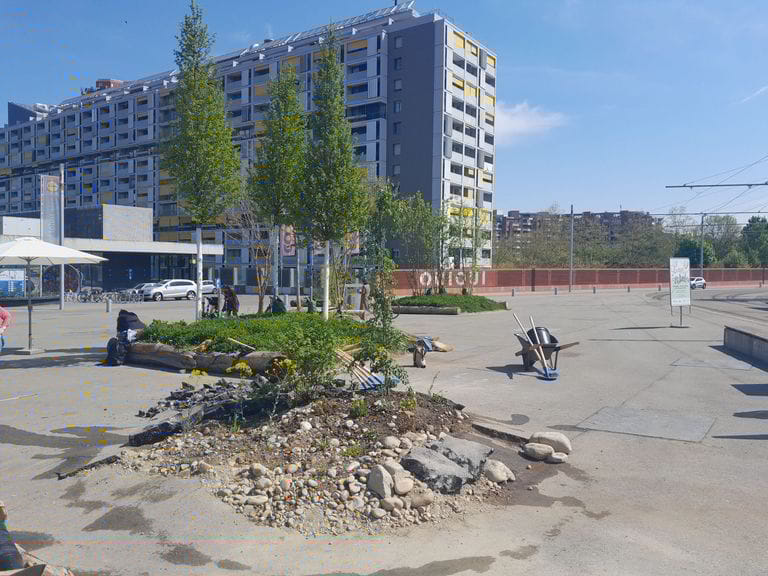
How can the urban heat island effect be counteracted? Answer: Through greening! During a pilot project in 2021, an average cooling effect of 3°C and a maximum temperature difference of up to 20°C was measured at Ansermetplatz in Bern. Simple measures such as plants, seating, and temporary greening transformed the sealed heat island into a cooler, more livable oasis. Read more here
| |
|
| |
|
|
|
| | New advisory opinion from the International Court of Justice on the responsibility of states in relation to climate change
| |
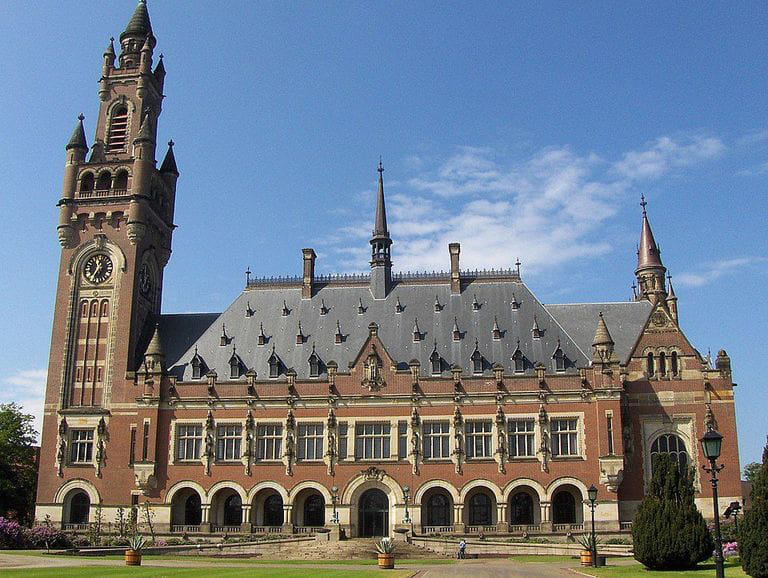
| | On July 23, the International Court of Justice (ICJ) in The Hague published a long-awaited advisory opinion: States have binding obligations under international law to protect the global climate. If they fail to fulfill these obligations, their behavior may in future be classified as contrary to international law. The ICJ also ruled that the right to a “clean, healthy, and sustainable” environment is a universal human right. The ICJ further emphasized that climate change poses an “existential threat of planetary proportions” that has undoubtedly been caused by human activities. This opinion is considered groundbreaking by legal and climate experts. Mehr / Plus / More | | | |
| | World's third warmest June | |
| |
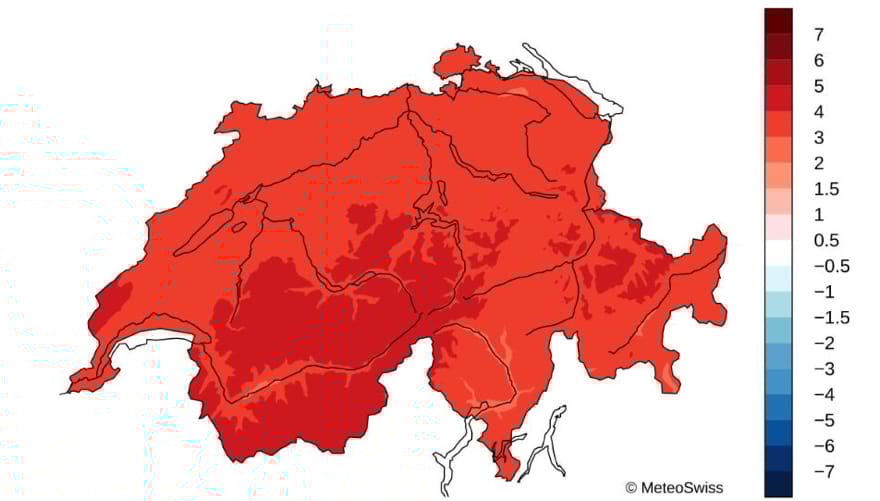
According to the European Copernicus service, June 2025 was the third warmest June in the world with an average air temperature of 16.46°C, 0.47°C above the 1991-2020 average. The temperature was 1.3°C above the pre-industrial reference period 1850-1900. In Switzerland, June 2025 was the second warmest June since measurements began in 1864, with an average monthly temperature of 16.3°C and a deviation of +3.8°C from the reference period 1991-2020. Only the June 2003 was warmer (17.3°C). Mehr / Plus
| | | |
| | How secure is our energy supply? | |
| |
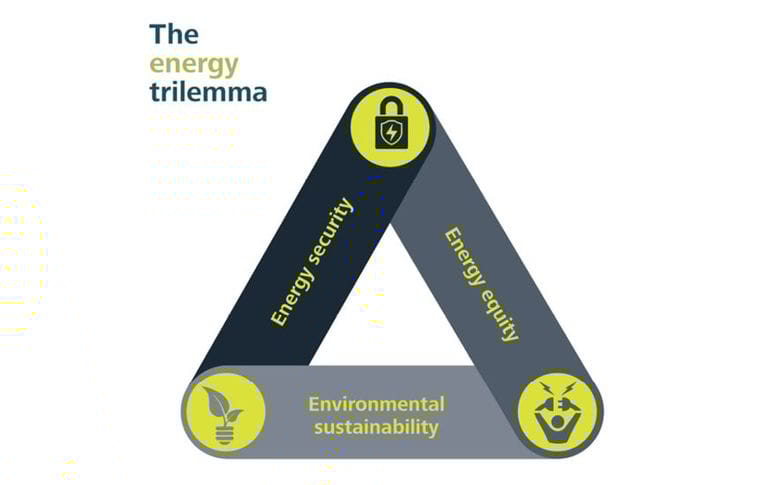
We need to make our energy system more sustainable – but what is the best way to achieve this? In order to plan the energy supply of the future, policymakers need sound facts and figures. Science already provides reliable models for comparing the sustainability and the costs of different energy systems. Now, Empa researchers have also developed a model for calculating supply security. Weiter / Plus/ More
| | | |
| | How much will Swiss watercourses warm up? | |
| |
By the end of the century, water temperatures in Swiss rivers will rise by up to 3.5 degrees if no action to protect the climate is taken. The rivers in the Alps are particularly affected. This is the conclusion reached by researchers from Eawag and the University of Basel in a research project funded by the FOEN. Mehr / Plus / More | | | |
|
| | | 28.08.2025 Beat the Heat Conference 2025
Conference, Allschwil ❯❯ | |
| | 03.- 04.09.2025 ScienceComm25
Event, St. Gallen ❯❯ | |
| | 26.10.2025 Save the date: Earth, folks! – The changing climate’
Exhibition, Bern ❯❯ | |
| | 28. - 30.10.2025 From space to climate services: co-creation
Conference, Darmstadt ❯❯ | |
| | 04.11.2025 Climate CH2025
Event, Zürich ❯❯ | |
| | 26.11.2025 Sustainability Science Forum 2025: Ensuring a just transition towards a net zero society
Symposium, Bern ❯❯
| |
| | 05.12.2025 Climate Justice: Scientific, Ethical, and Legal Dimensions
Conference, Bern ❯❯ | |
| | 20.09. - 03.10.2026 Climate Risk Workshop 2026Workshop, Huesca ❯❯
| | | |
|
|
|
|
|
| | Call for Review of Essential Climate Variable
| |
| | The Global Climate Observing System (GCOS) Programme has been defining Essential Climate Variable (ECV) since the late 1990s when the term was coined. Now, an updated set of ECVs has been developed and GCOS is calling for reviewers. Deadline 8. September 2025. More
| |
|
| |
|
|
|
| | Call for proposals Project funding
| |
| | The project funding scheme enables qualified researchers to independently carry out projects on topics and research objectives of their own choosing. Individual or collaborative, disciplinary or interdisciplinary – realise your ideas with the SNSF. Deadline: 1 October 2025 Weiter / Plus / More
| |
|
| |
|
|
|
| | WMO Global Annual to Decadal Climate Update (2025-2029)
| |
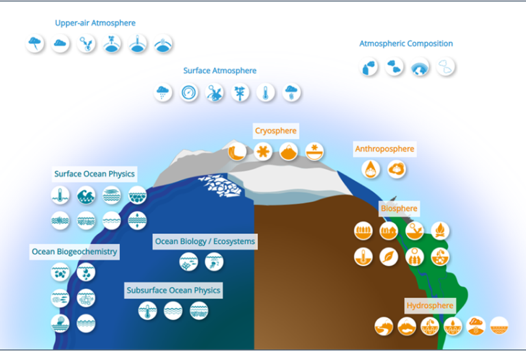
| | The Global Annual to Decadal Climate Update is issued annually by the World Meteorological Organization (WMO). It provides a synthesis of the global annual to decadal predictions produced by the WMO designated Global Producing Centres and other contributing centres. More
| |
|
| |
|
|
|
| | CO2 statistics: Emissions from thermal and motor fuels
| |
| | The CO2 statistics show the development in CO2 emissions from thermal and motor fuels and so illustrate the effectiveness of climate policy measures in the energy sector. As the amount of energy required for heating is heavily dependent on weather conditions, the CO2 statistics also show the development in CO2 emissions from thermal fuels corrected for weather conditions. The CO2 statistics are updated annually in July with the data up to the previous year. Weiter / Plus / More
| |
|
| |
|
|
|
| | Climate change: Special Eurobarometer 565
| |
| | A large majority of Europeans continue to view climate change as a serious global threat, with 85% of citizens identifying it as a major problem. Support for EU climate policy remains strong: 81% back the EU-wide goal of climate neutrality by 2050. A growing share of Europeans (38%) also report feeling personally exposed to environmental and climate-related risks. Citizens see climate action not only as necessary but beneficial—both economically and socially. Over three quarters (77%) agree that the cost of damage caused by climate change outweighs the cost of transitioning to a climate-neutral economy, while 88% support greater investment in renewables and energy efficiency. More | |
|
| |
|
|
|
| | Economic losses and fatalities from weather- and climate-related extremes
| |
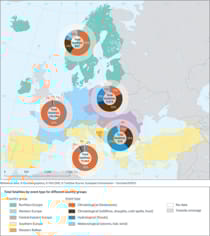
| | This briefing published by the european environment agency is about the significant fatalities and economic losses from natural hazards between 1980 and 2023. It also examines the widening insurance protection gap, includes fresh data on six Western Balkan countries and insights to complement the relevant annual indicator. More | | | |
|
| |
|
|
|
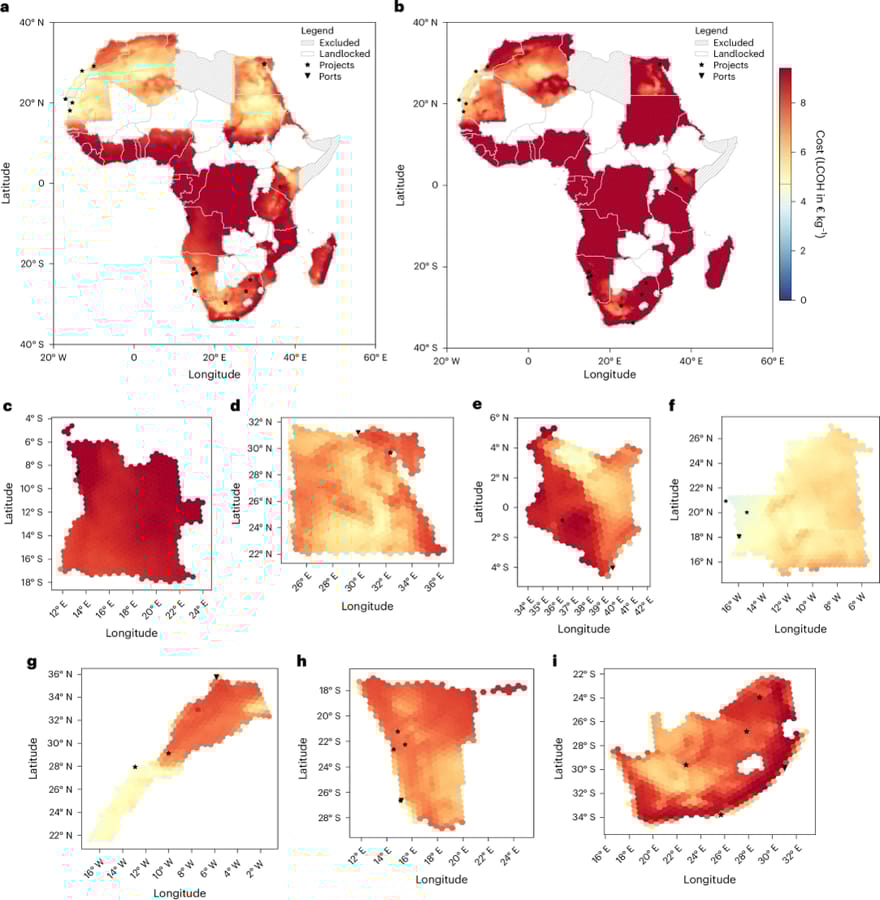
| | Fig. LCOH for Africa. a, LCOH for scenario 2, cash-constrained de-risked. b, LCOH for scenario 1, cash-constrained commercial. c–i, Detailed maps for Angola (c), Egypt (d), Kenya (e), Mauritania (f), Morocco (g), Namibia (h) and South Africa (i). The detailed map costs shown are for scenario 2, cash-constrained de-risked. | | | |
|
| | | | | Research impulse of the month
«Governments in many European countries have high hopes for cheap green hydrogen (H2) from Africa to decarbonize hard-to-abate sectors. Using geospatial levelized cost models, this study evaluates the economic feasibility of exporting green H2 in the form of ammonia from Africa to Europe under four realistic financing scenarios by 2030. If finds that without European policy interventions, green H2 from Africa remains prohibitively expensive.»- Egli, F., Schneider, F., Leonard, A. et al. Mapping the cost competitiveness of African green hydrogen imports to Europe. | | | |
|
|
|
|
|
| |
Swiss Academy of Sciences (SCNAT) Forum for Climate and Global Change (ProClim) | |
|
|
|
|