| | Forum for Climate and Global Change (ProClim)ProClim Briefing No 8
09.09.25 | |
|
|
|
| | Niklaus Heeb,
Head of Department Knowledge Visualization, Zurich University of the Arts | | | |
|
| | | Good afternoon We all know that Switzerland must become independent of fossil fuels as quickly as possible. Science already offers numerous options for action to achieve a climate-neutral economy and society. A key challenge is to communicate these ideas to the general public in a way that is understandable and appealing. Our Knowledge Visualization department at Zurich University of the Arts specializes in visualizing scientific topics and making the invisible visible. So-called future images can be used to bring the future to life. In partnership with ProClim and the Canton of Lucerne, we have succeeded in doing just that: with the help of realistic, concrete, and appealing images of the future, we show what a climate-neutral Canton of Lucerne could look like in 2050. “Put yourself in the picture!” The images do not only illustrate technological solutions. They are filled with small, lively details, with familiar and surprising elements. They show everyday situations and offer the curious eye new ideas and inspiration, and occasionally a wink. | |
 |
|
|
|
|
|
| | Illustrations: Elena Kaeser & Simone Stolz, Graphics: Scarlett Bang | |
| | Visions of the future show a climate-neutral Canton Lucerne
What will life be like in a future climate-neutral Canton Lucerne? The new visualizations “Visions of the Future: Climate in Canton Lucerne” bring climate protection and adaptation measures to life. The Canton of Lucerne hopes that these scientifically based images will stimulate constructive discussions about solutions. They show an overview of the entire canton and implementations in a landscape, a city, a village, an industrial area, and a mountain region. Possible solutions shown in the images include the use of renewable energies, more pedestrian and bicycle traffic, and green spaces to reduce urban heat in summer. The visualizations were created in collaboration with ProClim (SCNAT), the canton of Lucerne, and the Zurich University of the Arts (ZHdK). The project is supported by the Federal Office for the Environment (FOEN), the Albert Koechlin Foundation, and the Lottery Fund of the Canton of Lucerne. Read more here
| |
|
|
|
| |
How is climate change altering the risk of infectious diseases, and how likely is it that diseases such as West Nile fever will also occur in here in the future? A conversation with medical entomologist Pie Müller reveals the complexity of the relationships between climate, animal and human health – and which strategies can help to identify and contain risks at an early stage. Read more here
| |
|
| |
|
|
|
| | Swiss science in global action for the climate
| |
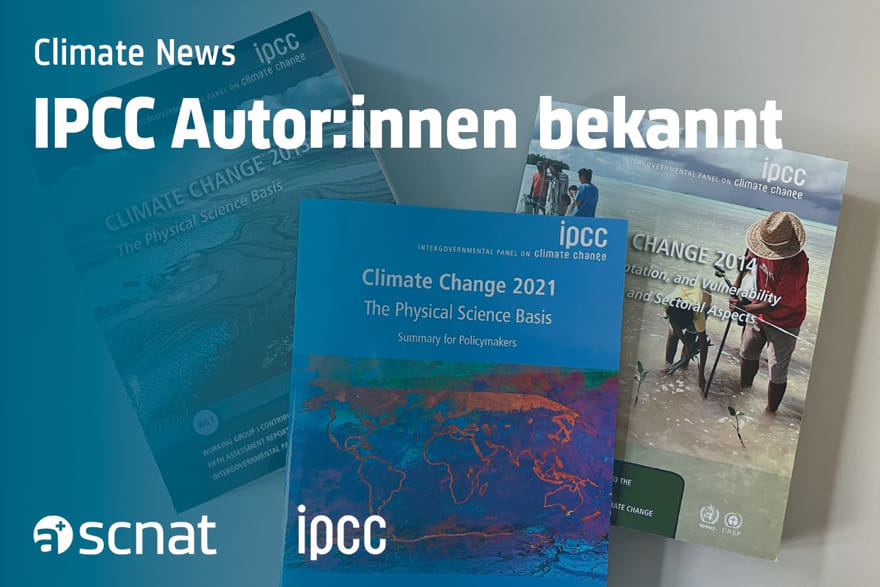
| | The Intergovernmental Panel on Climate Change has appointed several Swiss scientists to contribute to the next world climate report (AR7). This is a great honor—and a strong indication of the quality of research in Switzerland. These researchers are involved.
Working Group I: Erich Fischer (ETH Zurich)—Lead Author Thomas Frölicher (University of Bern)—Coordinating Lead Author Lukas Gudmundsson (ETH Zurich) – Lead Author Charlotte Laufkötter (University of Bern) – Lead Author Athanasios Nenes (EPFL Lausanne) – Coordinating Lead Author Sonia I. Seneviratne (ETH Zurich) – Review Editor
Working Group II: Stefano Battiston (University of Zurich) – Coordinating Lead Author Tobias Brosch (University of Geneva) – Lead Author
Working Group III: Anthony Patt (ETH Zurich) – Coordinating Lead Author Dr. Haris Piplas (ETH Zurich) – Review Editor Evelina Trutnevyte (University of Geneva) – Coordinating Lead Author Mehr / Plus / More | | | |
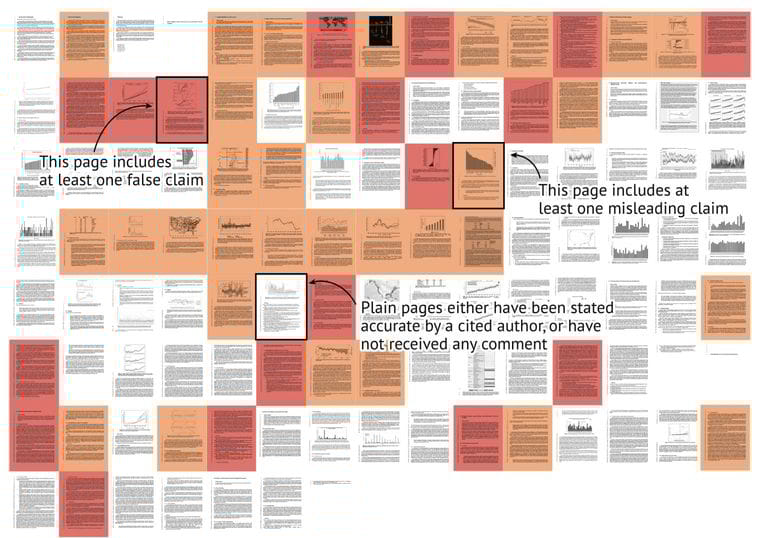
| | Factcheck: Trump’s climate report includes more than 100 false or misleading claims
| |
| | A “critical assessment” report commissioned by the Trump administration to justify a rollback of US climate regulations contains at least 100 false or misleading statements, according to a Carbon Brief factcheck involving dozens of leading climate scientists. More | | | |
| | "Our goal is a secure, predictable future for the Arctic"
| |
| |
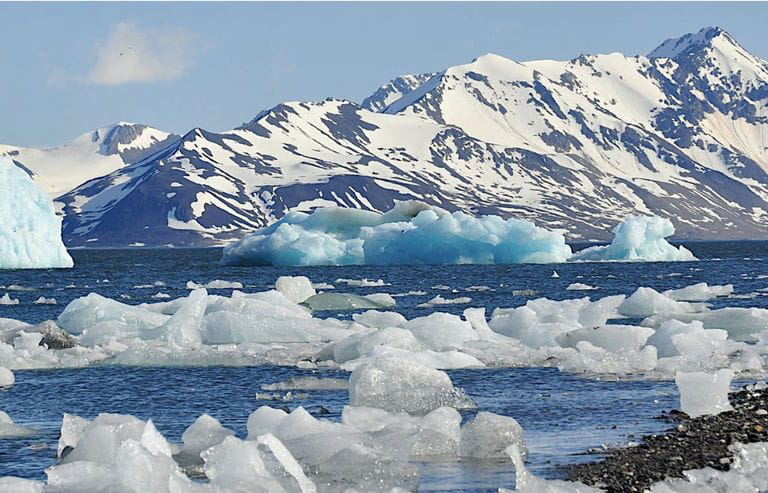
In addition to its contribution to polar research, Switzerland is also committed to peaceful and sustainable development in the Arctic at the diplomatic level. Through the Geneva Centre for Security Policy (GCSP), it strengthens dialogue and cooperation between actors in the polar region. The founder and moderator of the unofficial dialogue platform 'High North Talks', Paul Dziatkowiec, reports on his work at the GCSP. Mehr / Plus/ More
| | | |
| | Climate history from a lake at almost 5000 metres above sea level
| |
| |
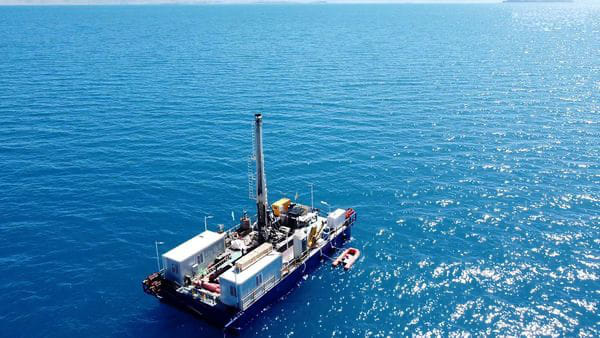
Surprisingly little is known about the climate history of the greater Tibet-Himalaya region. However, this information is urgently needed to predict how climate change will alter the water cycle there. Information stored in the sediments of Tibet's Nam Co Lake should now allow new conclusions to be drawn. A video presents the project. Mehr / Plus / More | | | |
|
| | | 05.09.2025 Swiss Polar Day 2025Event, Zurich ❯❯
| |
| | 06.09.2025 Nacht der Forschung 2025Event, Bern ❯❯
| |
| | 18.09.2025 The avalanche disaster in BlattenWorkshop, Innsbruck ❯❯
| |
| | 26.10.2025 Save the date: Earth, folks! – The changing climate’
Exhibition, Bern ❯❯ | |
| | 28.-30.10.2025 From space to climate services: co-creation
Conferenz, Darmstadt ❯❯ | |
| | 30.10.2025 Klimaschutz und graue Emissionen - 2. Berner Klimarechtstagung
Symposium, Bern ❯❯ | |
| | 04.11.2025 Climate CH2025
Event, Zurich ❯❯ | |
| | 26.11.2025 Sustainability Science Forum 2025: Ensuring a just transition towards a net zero society
Symposium, Bern ❯❯
| |
| | 28. – 29.11.2025 Klimagipfel für Landwirtschaft und EsskulturEvent, Landquart ❯❯ | |
| | 05.12.2025 Climate Justice: Scientific, Ethical, and Legal Dimensions
Conferenz, Bern ❯❯ | |
| | 05.-06.12.2025 23. Swiss Geoscience Meeting
Event, Bern ❯❯ | |
| | 20.09. - 03.10.2026 Climate Risk Workshop 2026Workshop, Huesca ❯❯
| | | |
|
|
|
|
|
| | Call for Review of Essential Climate Variable
| |
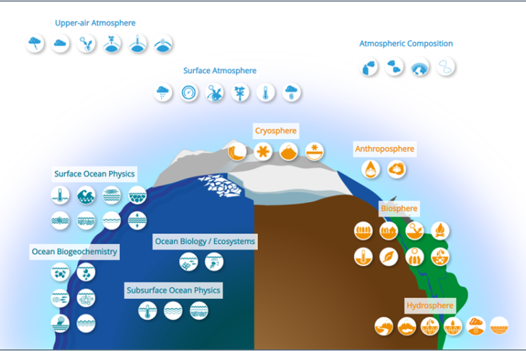
| | The Global Climate Observing System (GCOS) Programme has been defining Essential Climate Variable (ECV) since the late 1990s when the term was coined. Now, an updated set of ECVs has been developed and GCOS is calling for reviewers. Deadline 8 September 2025. More
| |
|
| |
|
|
|
| | Call for Submissions: The PAGES Early-Career Award
| |
| | PAGES invites nominations for its Early-Career Award (ECA), which recognizes excellence in collaborative scholarship, including research, communication, outreach, leadership, networking, community service, and international collaboration. The next deadline for submission is 29 September 2025. More
| |
|
| |
|
|
|
| | Call for proposals Project funding
| |
| | The project funding scheme enables qualified researchers to independently carry out projects on topics and research objectives of their own choosing. Individual or collaborative, disciplinary or interdisciplinary – realise your ideas with the SNSF. Submission deadline: 1 October 2025 Mehr / Plus / More
| | | |
|
| |
|
|
|
| | Berücksichtigung des Klimas im Umweltverträglichkeitsbericht
| |
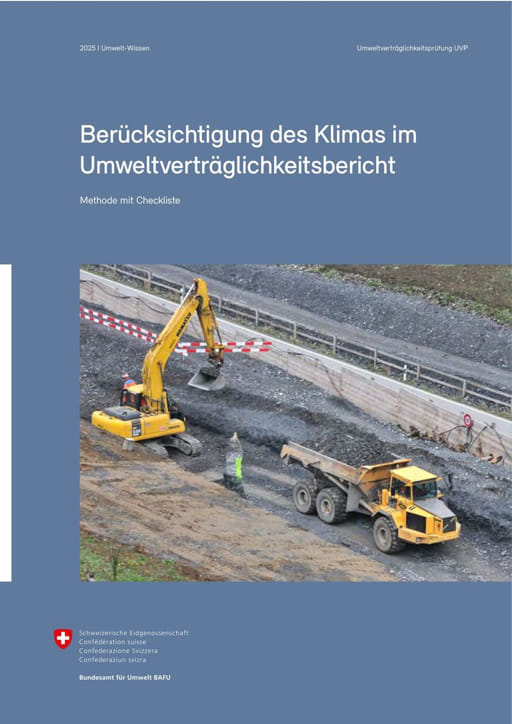
| | Ziel des vorliegenden Berichts ist es, mit geringem Zusatzaufwand die Berücksichtigung klimarelevanter Aspekte im Rahmen der Umweltverträglichkeitsprüfung zu ermöglichen und gleichzeitig ein gemeinsames Begriffs- und Systemverständnis zu schaffen. Der Bericht richtet sich insbesondere an Gesuchstellende, Bauherrschaften, UVP- und Klima-Fachstellen. Die Methode schliesst direkte, indirekte, vor- und nachgelagerte Emissionen (Scopes 1 bis 3) ein. Des Weiteren enthät der Bericht Massnahmen zur Anpassung an den Klimawandel. Weiter / Plus | |
|
| |
|
|
|
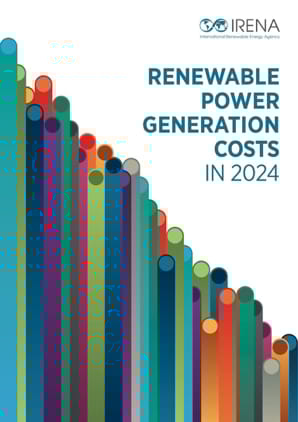
| | Renewable Power Generation Costs in 2024
| |
| | The latest cost analysis from the International Renewable Energy Agency (IRENA) shows that renewables continued to represent the most cost-competitive source of new electricity generation in 2024. Total installed costs for renewable power decreased by more than 10% for all technologies between 2023 and 2024, except for offshore wind, where they remained relatively stable, and bioenergy, where they increased by 16%. Nevertheless, the combination of capacity factors, market share, and financing costs led to a slight increase in the levelised cost of electricity (LCOE) for some technologies: solar PV by 0.6%, onshore wind by 3%, offshore wind by 4%, and bioenergy by 13%. Meanwhile, costs declined for CSP (-46%), geothermal (-16%), and hydropower (-2%). More
| |
|
| |
|
|
|
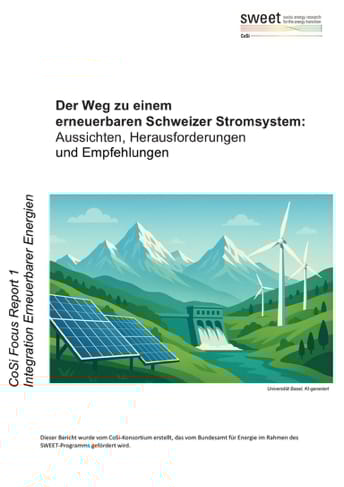
| | Der CoSi-Fokusbericht 1«integration Erneuerbarer Energien» analysiert den Weg der Schweiz zu einem erneuerbaren Stromsystem bis 2050. Als zentrale Erkenntnis wird festgehalten, dass eine klimaneutrale Stromversorgung technisch und finanziell machbar sei, wobei Wasserkraft und vor allem Photovoltaik die Hauptlast tragen werden. Der Bericht betont, dass die Versorgungssicherheit durch einen Mix aus verschiedenen Technologien, Speichern und Stromhandel mit der EU gewährleistet werden kann. Mehr / Plus | | | |
|
| |
|
|
|
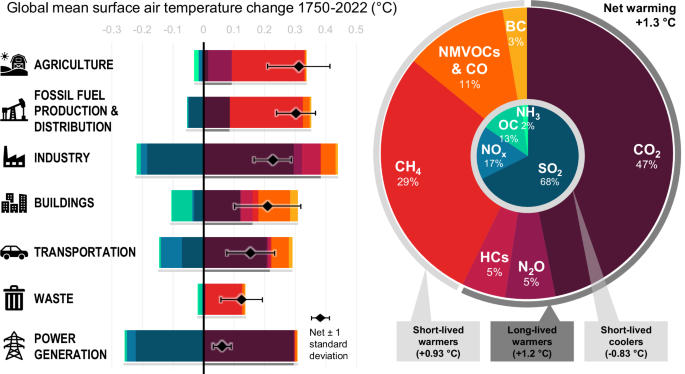
| | Fig. Global mean surface air temperature change from 1750 to 2022 due to historical emissions, by sector and climate forcer species.
| | | |
|
| | | | | Research impulse of the monthSectors that predominantly emit short-lived warmers drive half of today’s warming (~0.6 °C). However, their current-year emissions have a lesser impact on 100-year temperature projections due to proportionally lower longer-lived species. Sectoral emissions dominated by longer-lived warmers impact temperature for centuries – an impact which accumulates over time. However, shorter-lived climate coolers from these sectors mask ~50% of their present-day warming (~33% overall).
- B. Bump, I. Ocko, Y. Xu et al. 2025
Considering sectoral warming and cooling emissions and their lifetimes can improve climate change mitigation policies | | | |
|
|
|
|
|
| |
Swiss Academy of Sciences (SCNAT) Forum for Climate and Global Change (ProClim) | |
|
|
|
|