| | Forum for Climate and Global Change (ProClim)
ProClim Briefing No 12
16.12.25 | |
|
|
|
| | Filippo Lechthaler,
Leiter ProClim | | | |
|
| | | Hello A year ago, I looked back – here in this newsletter – on the two warmest years since records began, and stressed how important it remains to have an evidence- and solution-oriented climate discourse, precisely because change is advancing so rapidly. Today, at the end of 2025, it is clearer than ever that not only climate processes and their impacts shape our everyday lives. Political and social shifts have sharpened the tone; expectations of science have become more multifaceted, and engagement with the public more demanding. At the same time, it is also evident that social change can progress under challenging conditions – often locally, in practical ways, and sometimes independently of major political developments. In fiscal policy, acting against the trend is called countercyclical. Perhaps we need more of this approach in public debates on climate and energy, as well. At the Swiss Academy of Sciences, we see it as our mission to stay the course even when the issue slips from the spotlight. As a scientific platform for dialogue, we provide orientation, bring different scientific perspectives into conversation, and highlight actionable options – without alarmism, but also without downplaying the challenges. Evidence-informed debates do not emerge on their own, but they can be made possible again and again when we collectively foster and shape them. This attitude has guided and energised us throughout the year. It is why I remain hopeful despite everything. | |
 |
|
|
|
|
|
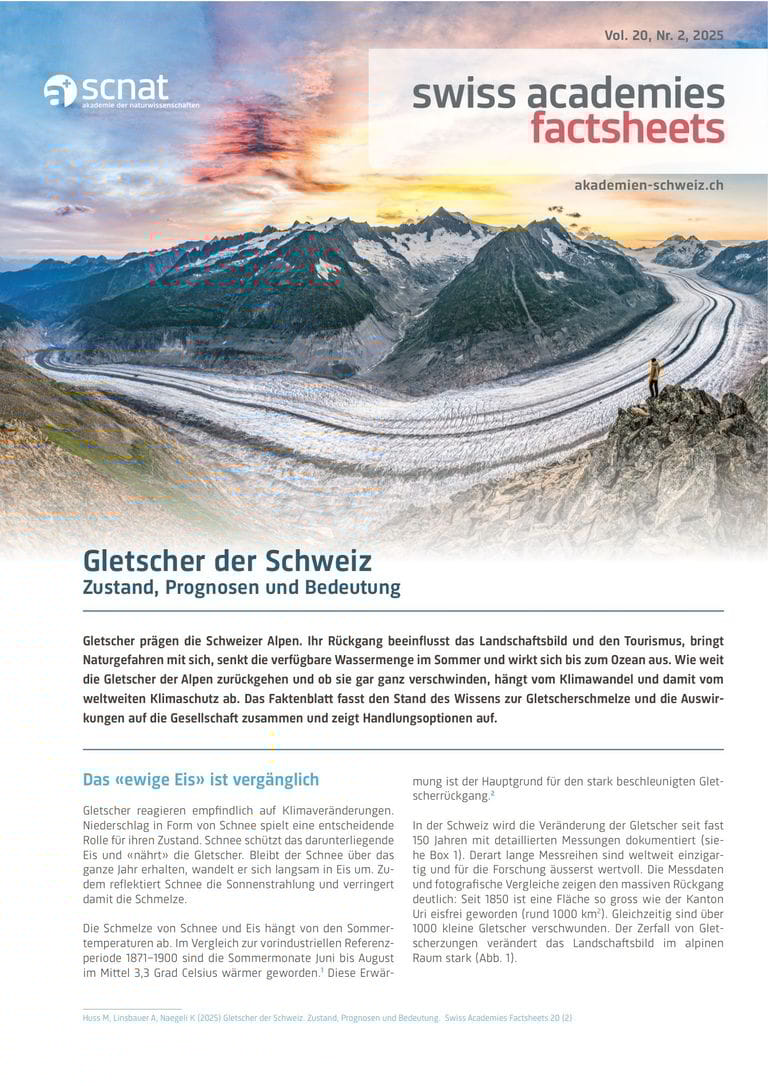
| | | March 2025: Publication of the factsheet «Glaciers in Switzerland»Glaciers shape the Swiss Alps and are sensitive to climate change. Their retreat affects the landscape and tourism, harbours natural hazards, reduces the amount of water available in summer, and has an impact all the way to the ocean. In Switzerland, changes in glaciers have been documented with detailed measurements for almost 150 years. The extent to which the glaciers in the Alps retreat and whether they disappear altogether depends on climate change and thus on global climate protection. The factsheet summarizes the current state of knowledge on glacier melt and its impact on society and outlines options for action. It was compiled in collaboration with researchers from GLAMOS, the Swiss Glacier Monitoring Network, the Swiss Commission for Cryosphere Observation (SCC), the Swiss Snow, Ice and Permafrost Society (SIP), and ProClim. Find out more here
| |
|
|
|
|
|
| | Bild: Andres Jordi, SCNAT | |
| | April 2025: Swiss Global Change Day 2025
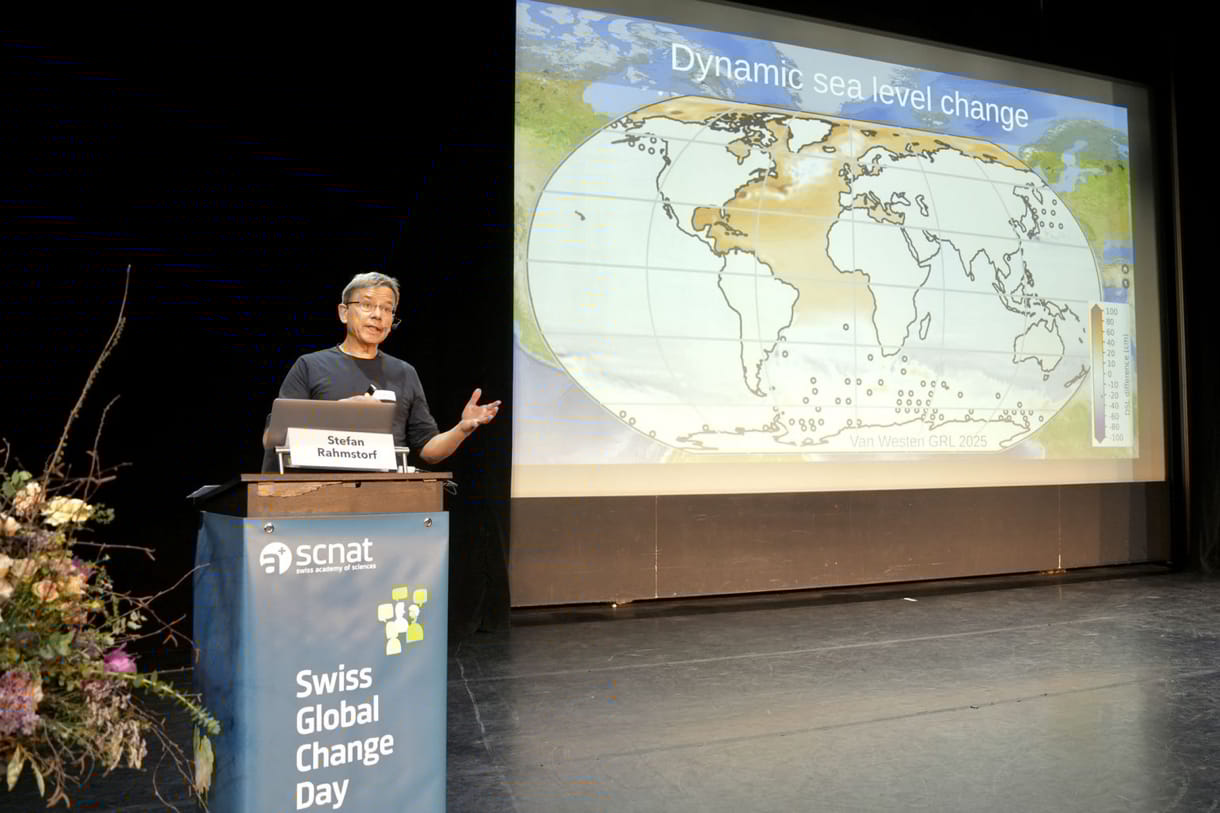
On 9 April 2025, Swiss climate scientists met for the 25th time at the annual Swiss Global Change Day. Around 180 participants attended the event. Renowned researchers from various disciplines presented scientific highlights from current climate research, including Stefan Rahmstorf, Lint Barrage, Nadine Strauss, Niklaus Zimmermann, Charlotte Blattner, Ana M. Vicedo-Cabrera, and Sonia Seneviratne. The program also allowed plenty of time for discussion and networking, for example during the poster sessions, where around 60 young researchers presented their projects.
| |
|
|
|
| | Bild: Miriam Künzli / Greenpeace
| |
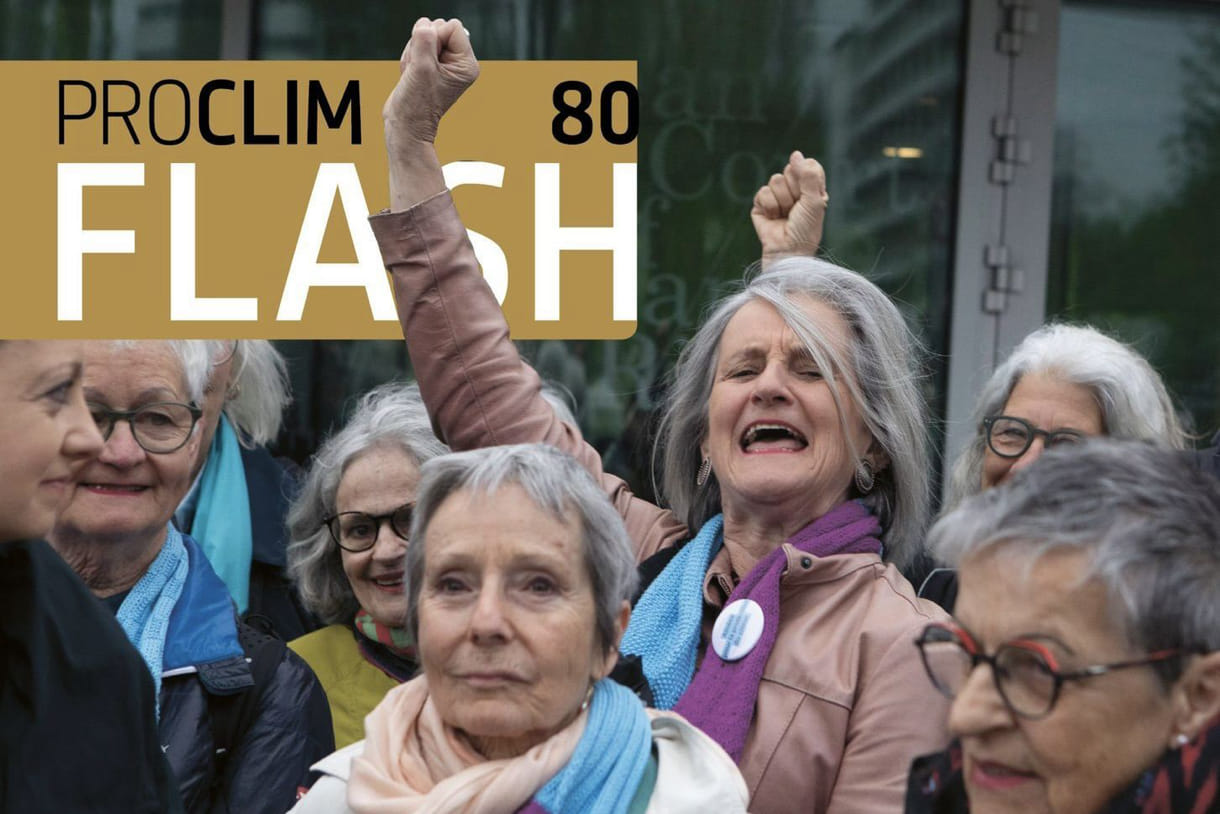
| | June 2025: Publication ProClim Flash 80 «A matter of law and justice – The role of the judiciary in climate change»The 80th edition is dedicated to the topic “A question of law and justice: the role of the judiciary in climate change.” Can climate lawsuits improve climate protection and climate justice? Is it effective to sue for climate protection as a human right, as the KlimaSeniorinnen (Climate Seniors) have done? Should nature even have its own rights? How do people who are actively campaigning for the climate fare in court? And what if climate protection lawsuits are filed as a form of climate activism? Finally, what legal challenges does “climate migration” present us with? Missed this issue? All texts are available online. Find out more here | |
|
|
|
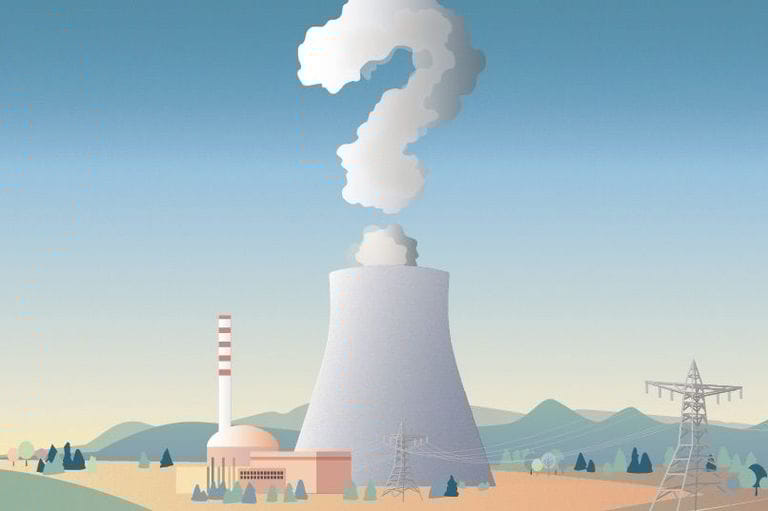
| | July 2025: Publication of the report «Prospects for nuclear energy in Switzerland»The Swiss electricity supply is facing major challenges: electricity demand is rising because road transport and heating are to be electrified and new data centers are consuming more electricity. The report “Prospects for Nuclear Energy in Switzerland” by the Energy Commission of the Swiss Academies of Arts and Sciences provides decision-makers in politics and industry, as well as the general public, with well-founded information for a debate that is as objective as possible. It provides an up-to-date overview of the current state of technology and the nuclear industry, and what prospects can be expected for nuclear energy in a future energy system with a high proportion of renewable energies. In addition, the report outlines a possible timetable with seven important decisions that are necessary on the path to a new nuclear power plant. Learn more here
| |
|
|
|
| | Bild: Patricia Binggeli, Gemeinde Emmen | |
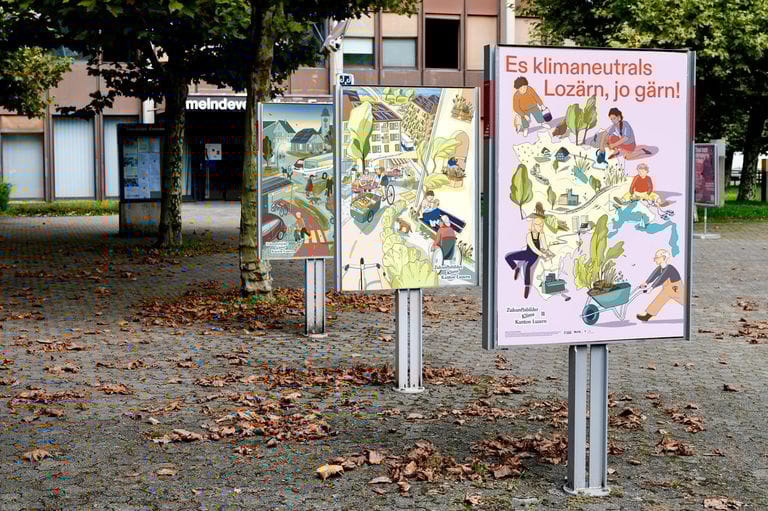
| | September 2025: Publication «Climate future visions Canton of Lucerne»What could a climate-neutral Canton Lucerne look like? The new visualizations Climate future visions Canton of Lucerne explore this question and highlight possible solutions. An overview image for the entire canton, a landscape, a city, a village, an industrial area, and a mountain region. The images show various solutions in the areas of climate protection and climate adaptation. These include, for example, the use of renewable energies, more pedestrian and bicycle traffic, and green spaces to reduce urban heat in summer. The visualizations were created in a joint project between the canton of Lucerne, ProClim, and the Zurich University of the Arts (ZHdK). The project aims to raise awareness and stimulate discussion about solutions using new approaches to science communication.
| |
|
|
|
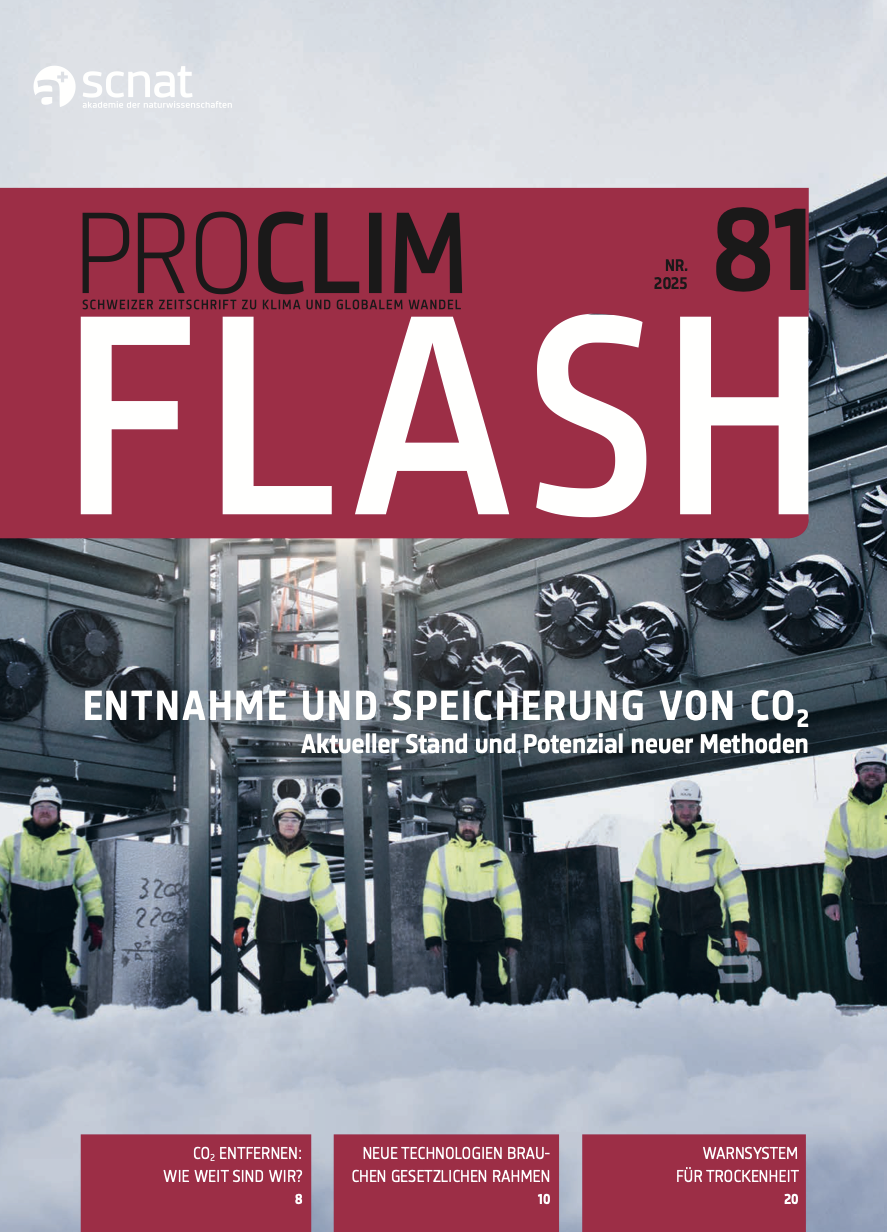
| | | October 2025: Publication Flash 81 «CO₂ capture and storage – current status and potential of new methods»Reducing greenhouse gas emissions is essential. But one thing is clear: to achieve the goals of the Paris Climate Agreement, technologies for CO₂ removal and similar processes are needed. Flash 81 presents the current state of research and the potential of new methods. It also highlights legal and moral issues related to CO₂ removal and storage. New methods for reducing emissions or removing CO₂ from the atmosphere can only be effective if a clear legal framework provides planning security. The necessary technologies must also be widely accepted by society. Missed this issue? All articles are available online. Learn more here | |
|
|
|
|
|
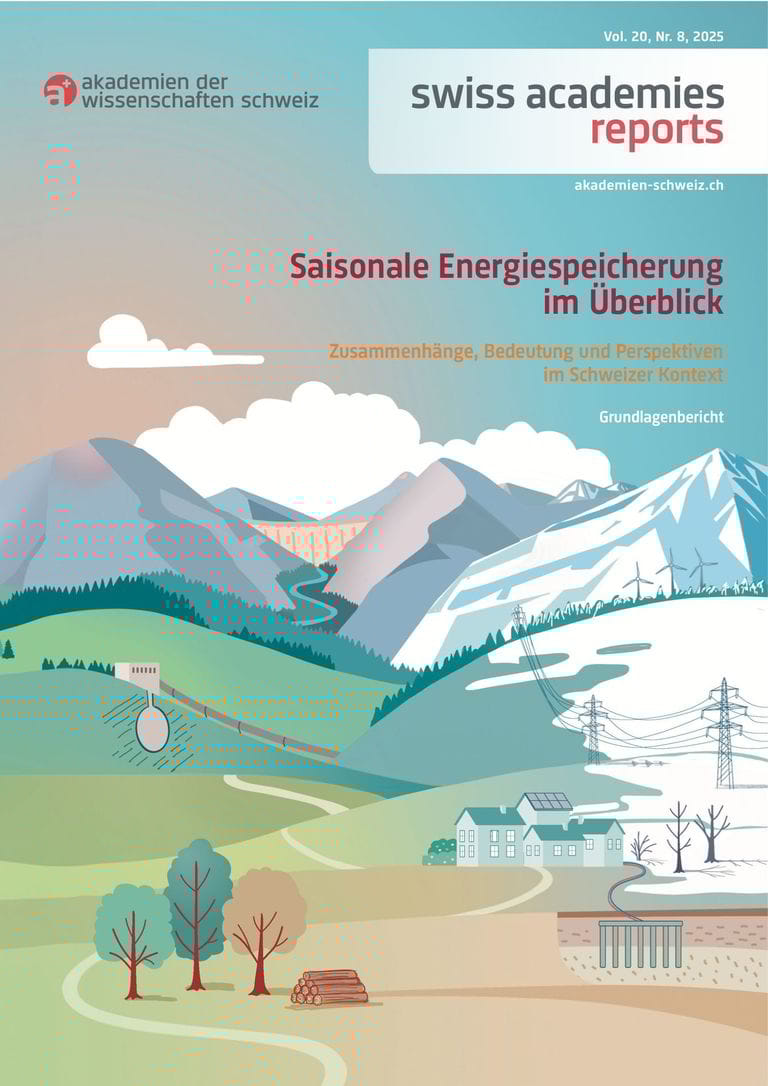
| | | November 2025: Publication of the report «Seasonal energy storage: an overview»This report by the Energy Commission, “Seasonal energy storage: an overview – Interrelationships, Significance, and Prospects in the Swiss Context” provides a comprehensive overview of the topic and is available in a compact summary and a detailed background report. The decarbonization of the Swiss energy system is necessary for climate protection, but it also brings new challenges. One example is the increasing seasonal discrepancy between energy production and demand. Seasonal storage can address this challenge and offers numerous other advantages. At the same time, the framework conditions for the large-scale use of such storage facilities are often not yet attractive. Learn more here
| |
|
|
|
|
|
| | Swiss researchers in action for the climateThe Intergovernmental Panel on Climate Change (IPCC) has appointed several Swiss scientists to contribute to the next world climate report (AR7). This is a great honor – and at the same time a strong sign of the high quality of research in Switzerland. Six researchers from Switzerland are represented in Working Group I, two in Working Group II, and three in Working Group III.
The first lead author meeting took place in Paris in December, where work on the first drafts began. The next important milestone will be in March 2026, when the plenary meeting will set the schedule for the publication of the new IPCC report. ProClim would like to thank the researchers for their commitment! Find out more here. | |
|
|
|
| |
Swiss Academy of Sciences (SCNAT) Forum for Climate and Global Change (ProClim) | |
|
|
|
|