| | Forum for Climate and Global Change (ProClim)
ProClim Briefing No 9
06.10.25 | |
|
|
|
| | Prof. Dr. Olivia Romppainen-Martius, Member of the ProClim Steering Committee, Head of the Climate Impact Research Group, Co-Head of the Mobiliar Lab for Natural Risks at the University of Bern
| | | |
|
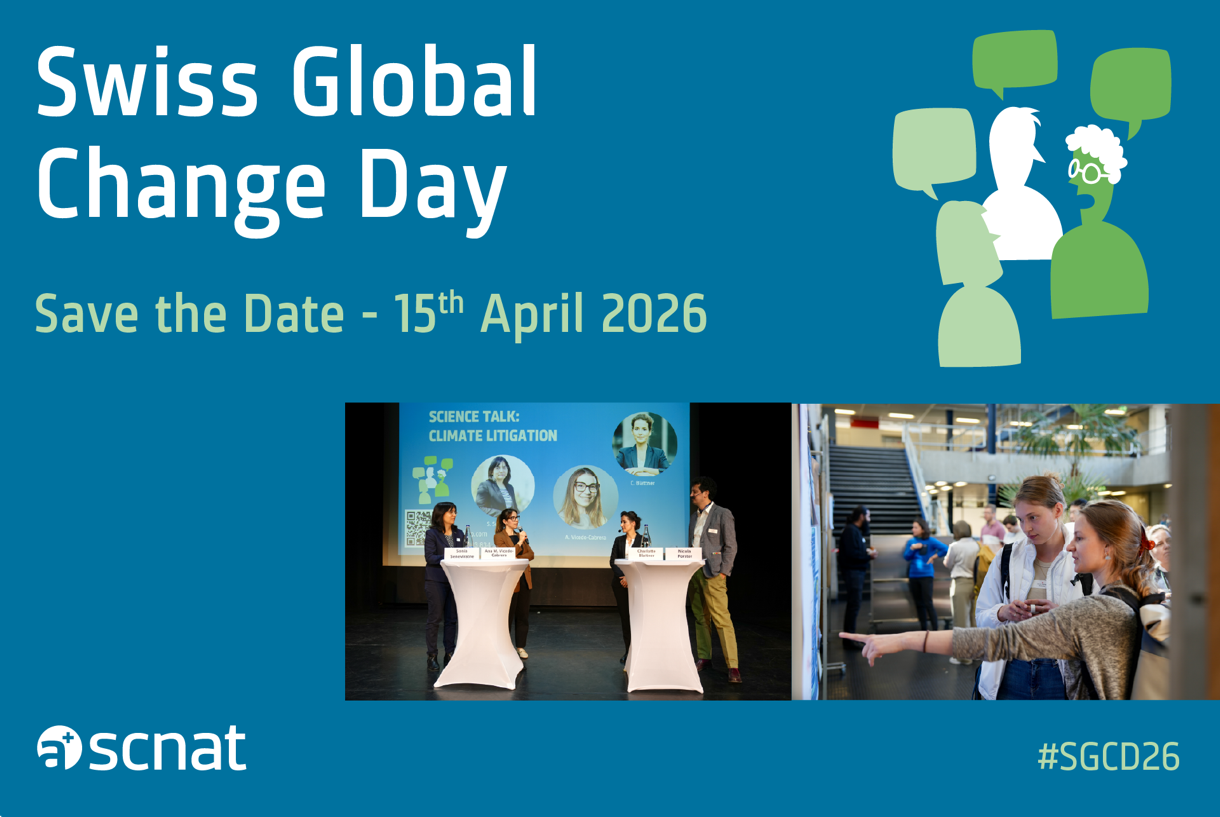
| | | Hello Ocean acidification, cyclones in the Mediterranean region, and the effects of heat on health – these are the topics being researched by the winners of the Poster Award at the latest Swiss Global Change Day. As I stroll between the poster walls at the climate conference, I am impressed by how diverse climate research has become. The more diverse the field of research, the more important platforms for interdisciplinary exchange become. What I particularly appreciate about Swiss Global Change Day is that it brings together researchers from all over Switzerland and from different disciplines to discuss their research on climate change. In addition to exciting keynotes offering insights into current climate research, coffee and lunch breaks provide opportunities for exchange. Renowned scientists engage in conversation with promising young researchers. It will be a while until the next Swiss Global Change Day. But mark April 15, 2026, in your calendar so you don't miss the 26th edition. Will we see you there? | |
 |
|
|
|
|
|
| | SAVE THE DATE: 26th Swiss Global Change Day – 15 April 2026
Look beyond the horizon of climate and global change research and save the date for the 26th Swiss Global Change Day on 15 April 2026. In addition to expert talks, you will have plenty of time to present your own research or organisation through a poster or stand, and to network with colleagues. The most attractive and comprehensive posters submitted by students or postdocs will be honoured with a travel award of 1000 francs. Read more here
| |
|
|
|
| |
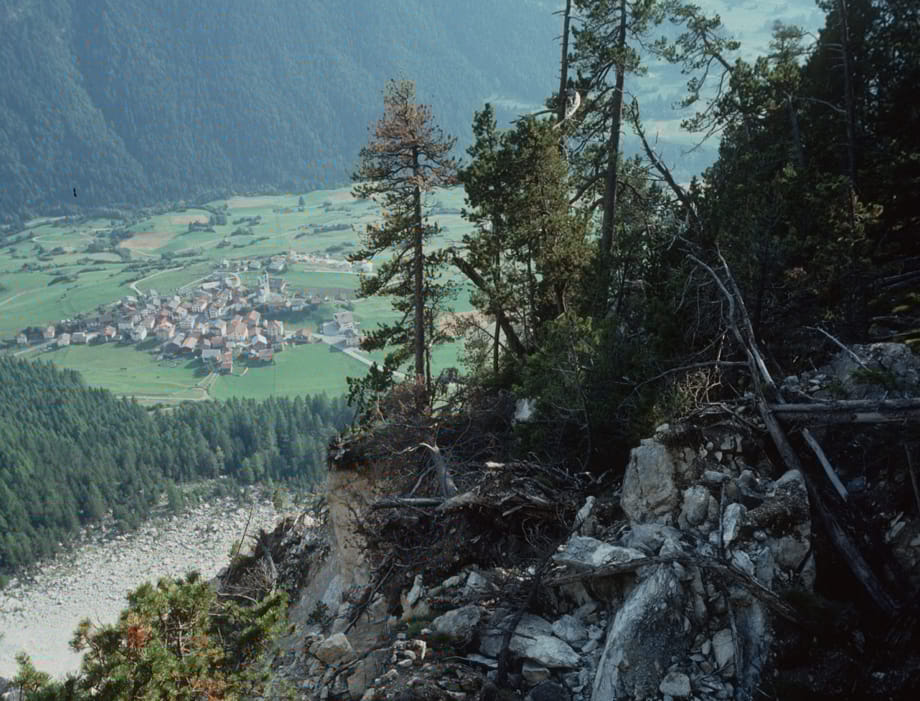
The Federal Constitution obliges the Confederation, cantons, and municipalities to protect human life from natural hazards. Relocations to protect against the impacts of climate change are increasingly being discussed in Switzerland as well. At the same time, however, the state is also obliged to respect private property. How this tension can be addressed from a legal perspective is explained in this flash article.
| |
|
| |
|
|
|
| | "Switzerland can leverage its profile – including for glacier preservation"
| |
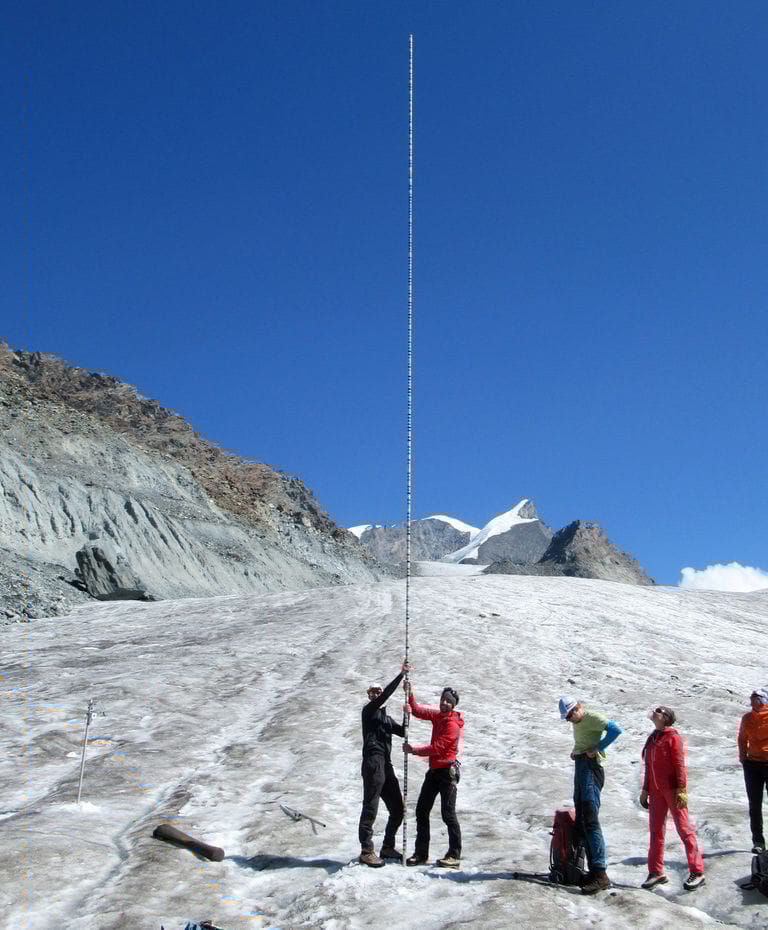
| | Climate change is accelerating glacier retreat in alpine and polar regions – with potentially devastating consequences for humans and the environment. Switzerland's polar and glacier research is world class, and contributes significantly to our understanding of global climate change while indirectly supporting climate protection. To find out more, we interviewed Professor Daniel Farinotti, a glaciologist at ETH Zurich. Mehr / Plus / More | | | |
|
| | | 26.10.2025 Earth, folks! – The changing climate’
Exhibition, Bern ❯❯ | |
| | 27.10.2025 Net zero in practice: roadmaps for companies and municipalities
Event, Bern ❯❯ | |
| | 04.11.2025 Switzerland’s future climate
Event, Zürich ❯❯ | |
| | 26.11.2025 Sustainability Science Forum 2025: Ensuring a just transition towards a net zero society
Symposium, Bern ❯❯
| |
|
|
|
|
|
| | IPCC: Call for Experts to Review the First-Order Draft of the Special Report on Climate Change and Cities
| |
| | The Intergovernmental Panel on Climate Change (IPCC) is looking for experts to participate in the review of the First-Order Draft (FOD) of the Special Report on Climate Change and Cities (SR Cities). The review period will run from 17 October to 12 December 2025. Interested experts can register now on the IPCC website. Registration closes on 30 November 2025. More
| |
|
| |
|
|
|
| | Call for the submission of information on existing voluntary collaboration between the communities of IPBES and IPCC
| |
| | Cooperation with the IPCC is becoming increasingly important for IPBES. To this end, IPBES is looking for successful examples of cooperation between the biodiversity and climate communities. Examples can be submitted online until October 31, 2025. The examples will then be collected and made available for discussion at the 12th Plenary Meeting. Weiter / Plus / More
| |
|
| |
|
|
|
| | Expressions of Interest for Coordinated Inputs to Support “Mountains” in the IPCC AR7
| |
| | As the IPCC AR7 gets underway, the MRI is calling for expressions of interest for experts interested and willing to engage in coordinated efforts to develop assessment-relevant scientific syntheses and technical analyses on mountains. Deadline to register is Friday 31 October 2025. More
| |
|
| |
|
|
|
| | The Carbon Removal Booster is the first open innovation program in Switzerland created to bring together key stakeholders to jointly develop and test ideas for new solutions needed to address important challenges in the carbon dioxide removal (CDR) space. Deadline 26th October 2025. More
| |
|
| |
|
|
|
| | Europe’s environment and climate: knowledge for resilience, prosperity and sustainability
| |
| | Significant progress has been made in reducing greenhouse gas emissions and air pollution, but the overall state of Europe’s environment is not good, especially its nature which continues to face degradation, overexploitation and biodiversity loss. The impacts of accelerating climate change are also an urgent challenge, according to the European Environment Agency’s (EEA) most comprehensive, "state of environment" report, published 29 September. The outlook for most environmental trends is concerning and poses major risks to Europe’s economic prosperity, security and quality of life. More
| |
|
| |
|
|
|
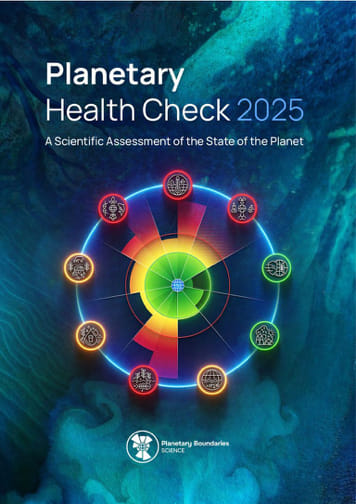
| | Planetary Health Check 2025 | |
| | The Planetary Health Check is a yearly report on the state of our planet. It presents the most up-to-date assessments of the Planetary Boundaries, gives thorough introductions into cutting-edge science, and spotlights especially relevant aspects of our planet's health. In this 2025 edition, special focus is placed on the Ocean's role in the Earth system, and assess for the first time that Ocean Acidification is the seventh transgressed Planetary Boundary. More
| |
|
| |
|
|
|
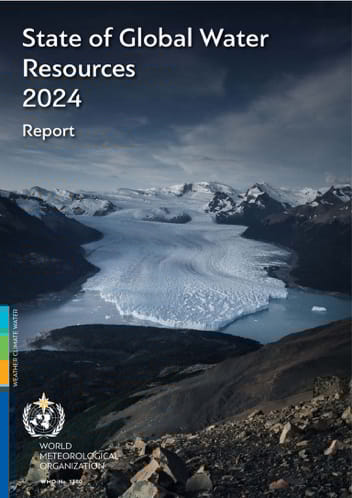
| | State of Global Water Resources 2024
| |
| | The 2024 edition of the State of Global Water Resources report published by the World Meteorological Organization documents an extraordinary year shaped by record heat, climate extremes, and widespread water-related impacts. With global surface temperatures reaching 1.55 °C above pre-industrial levels, 2024 was the hottest year in the 175-year observational record. Strong El Niño conditions at the start of the year amplified drought in South America and southern Africa, while other regions faced devastating floods. More
| |
|
| |
|
|
|
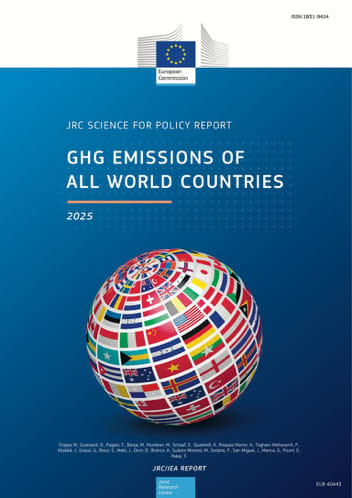
| | GHG emissions of all world countries
| |
| | Global greenhouse gas (GHG) emissions continued their upward trajectory in 2024, reaching a record 53.2 gigatonnes of CO₂ equivalent, according to the latest EDGAR report. Despite decades of climate agreements, fossil CO₂ remains the dominant driver, accounting for nearly three-quarters of global emissions. The report underscores the persistent global challenge: with only two exceptions since 2000—the financial crisis of 2009 and the COVID-19 pandemic in 2020—global emissions have steadily increased, intensifying the pressure to accelerate climate action under the Paris Agreement. More
| |
|
| |
|
|
|
| | Effectiveness of EU Emissions Trading: What drives emission developments?
| |
| | Since its launch in 2005, the EU Emissions Trading System (EU ETS) has significantly reduced greenhouse gas emissions in Europe’s power and industrial sectors. A new report by the German Environment Agency (UBA) shows where the trading system’s price signals have triggered cleaner electricity generation, and where economic demand, fuel choices, or technological pathways have played a stronger role. The analysis of steel, cement, refining and combustion sectors highlights both the successes of emissions trading and the challenges ahead for a climate-neutral industry. More | |
|
| |
|
|
|
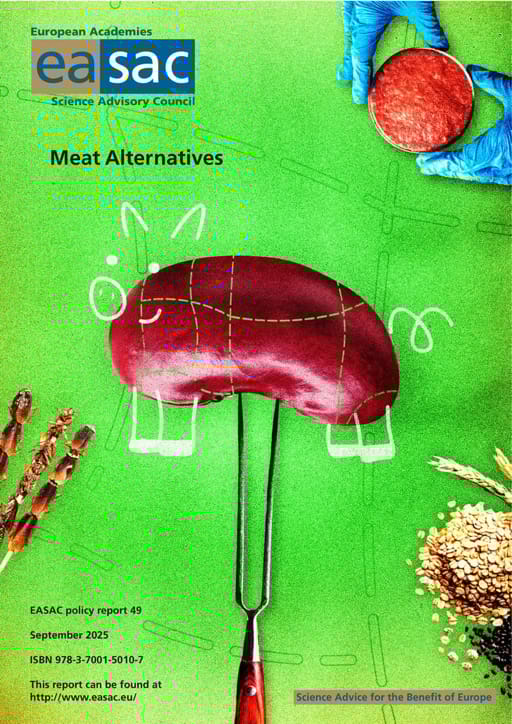
| | The European Academies Science Advisory Council (EASAC) published a comprehensive report on meat alternatives. As the EU is mulling a Protein Strategy to bolster sustainable food systems, the report examines the fast-growing world of meat alternatives, from plant-based and insect-derived proteins to microbial fermentation and cultivated meat. More | |
|
| |
|
|
|
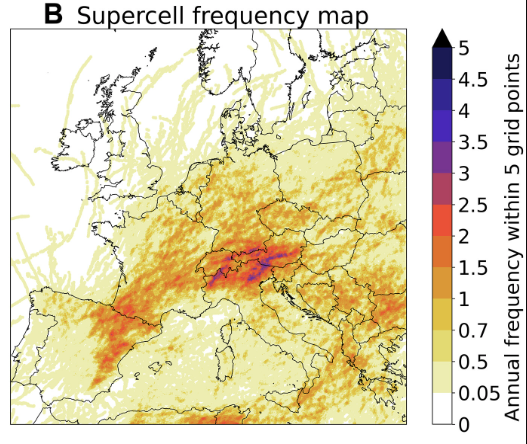
| | Fig. Annual average supercell frequency 2011–2021, within five grid points.
| | | |
|
| | | | | Research impulse of the month
The current climate shows several hundred supercells per convective season. Occurrence peaks are colocated with complex topography, e.g., the Alps. The absolute frequency maximum lies along the southern Alps and minima over the oceans and flat areas. Comparing a current-climate simulation with a pseudo–global warming +3°C global warming scenario, the future climate simulation shows an average increase of supercell occurrence by 11%.
- M. Feldmann, M. Blanc, K. Brennan et al.
European supercell thunderstorms—A prevalent current threat and an increasing future hazard
| | | |
|
|
|
|
|
| |
Swiss Academy of Sciences (SCNAT) Forum for Climate and Global Change (ProClim) | |
|
|
|
|