| | Forum für Klima und globalen Wandel (ProClim)ProClim Briefing Nr. 9
06.10.25 | |
|
|
|
| | Prof. Dr. Olivia Romppainen-Martius, Mitglied des ProClim-Kuratoriums, Leiterin der Gruppe Klimafolgen-forschung, Co-Leiterin Mobiliar Lab für Naturrisiken der Universität Bern
| | | |
|
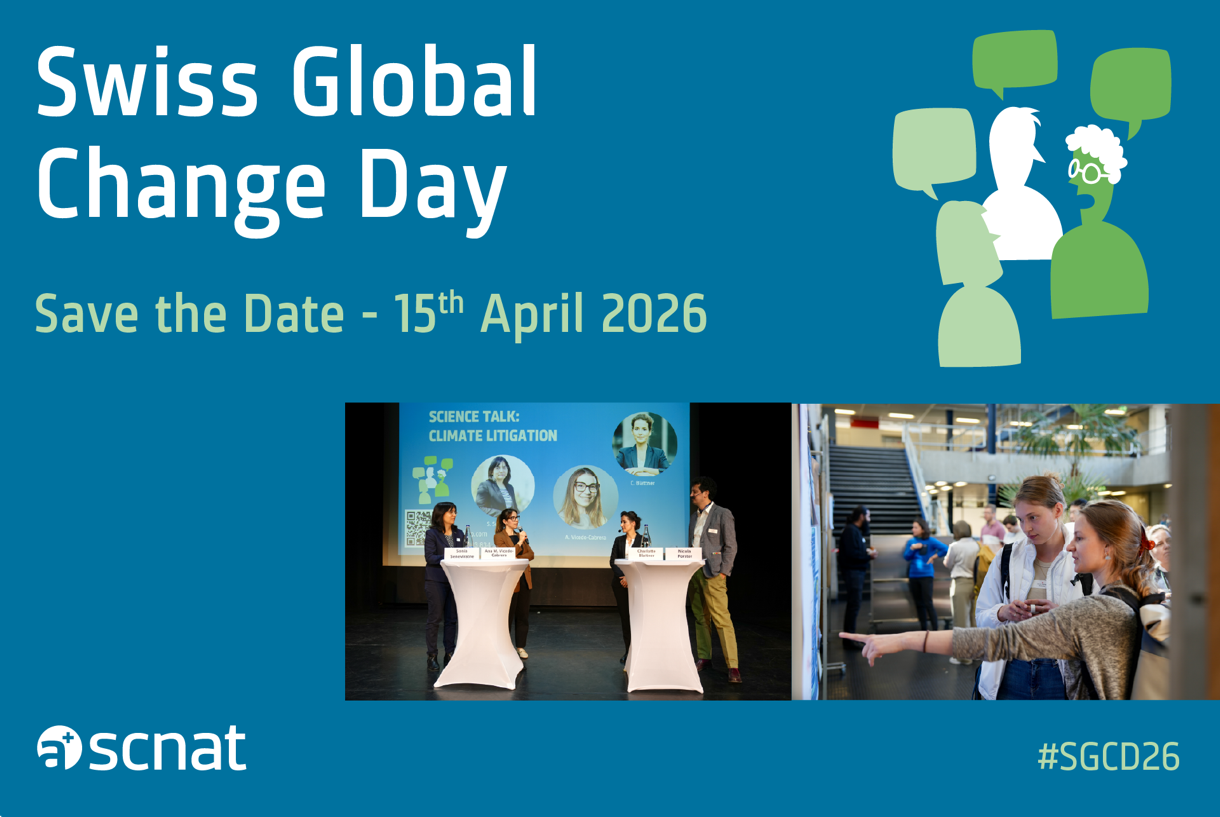
| | | Guten Tag Ozeanversauerung, Zyklonen im Mittelmeerraum und Auswirkungen der Hitze auf die Gesundheit – zu diesen Themen forschen die Gewinner:innen des Poster Awards am letzten Swiss Global Change Day. Wenn ich an der Klimatagung zwischen den Posterwänden hindurchschlendere, bin ich beeindruckt, wie vielseitig die Klimaforschung inzwischen ist. Je diverser das Forschungsfeld, desto wichtiger sind Plattformen für den interdisziplinären Austausch. Am Swiss Global Change Day schätze ich besonders, dass hier Forschende aus der ganzen Schweiz und aus unterschiedlichen Disziplinen aufeinandertreffen und sich über ihre Forschung zum Klimawandel austauschen. Neben spannenden Keynotes mit Einblicken in die aktuelle Klimaforschung schaffen Kaffee- und Mittagspausen Gelegenheiten zum Austausch. Renommierte Wissenschaftler:innen treten ins Gespräch mit vielversprechenden Nachwuchsforschenden. Es dauert noch eine Weile bis zum nächsten Swiss Global Change Day. Aber markieren Sie sich schon mal den 15. April 2026 in Ihrer Agenda, damit sie die 26. Ausgabe ja nicht verpassen. Sehen wir uns dort? | |
 |
|
|
|
|
|
| | SAVE THE DATE: 26th Swiss Global Change Day – 15 April 2026
Look beyond the horizon of climate and global change research and save the date for the 26th Swiss Global Change Day on 15 April 2026. In addition to expert talks, you will have plenty of time to present your own research or organisation through a poster or stand, and to network with colleagues. The most attractive and comprehensive posters submitted by students or postdocs will be honoured with a travel award of 1000 francs. Read more here
| |
|
|
|
| |
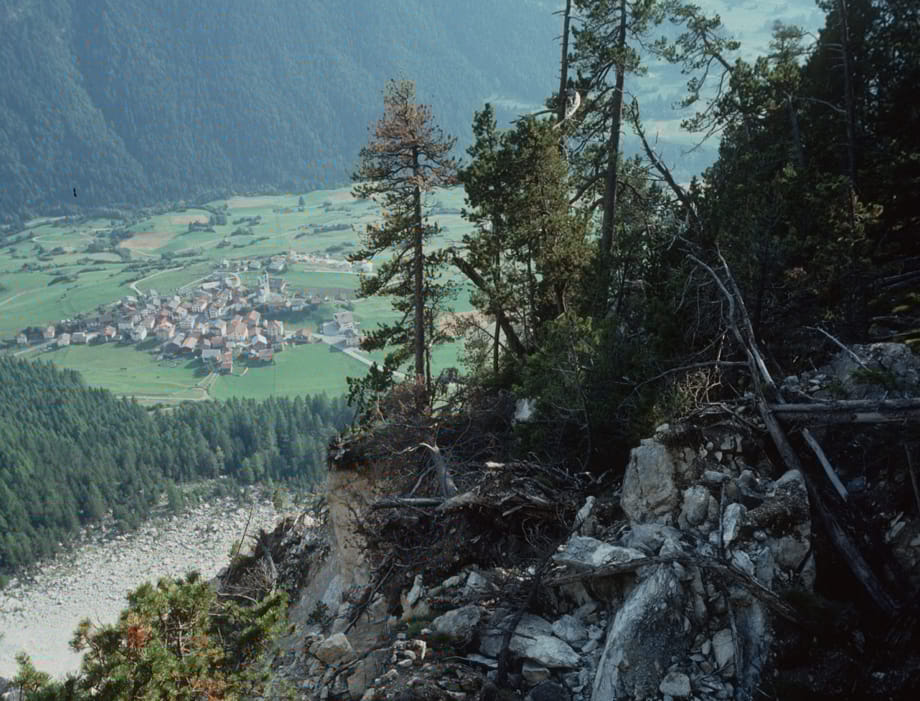
Die Bundesverfassung verpflichtet Bund, Kantone und Gemeinden dazu, menschliches Leben vor Naturgefahren zu schützen. Umsiedlungen zum Schutz vor den Auswirkungen des Klimawandels werden zunehmend auch in der Schweiz diskutiert. Gleichzeitig ist der Staat aber auch verpflichtet, privates Eigentum zu respektieren. Wie mit diesem Spannungsverhältnis aus rechtlicher Sicht umgegangen werden kann, lesen Sie in diesem Flashbeitrag.
| |
|
| |
|
|
|
| | Sommer 2025: Hitze im Juni und August, kühl und nass im Juli
| |
| | Der Sommer 2025 zählt zu den sieben wärmsten Sommern seit Messbeginn. Die Hitze im Juni und August wurde von einem weitgehend nassen und eher kühlen Juli unterbrochen. Die Niederschlagssummen waren im Norden, im Süden und im Osten der Schweiz überdurchschnittlich, in der Westschweiz unter der Referenz 1991-2020. Mehr / Plus | | | |
| | Bundesrat befasste sich mit Klimapolitik nach 2030
| |
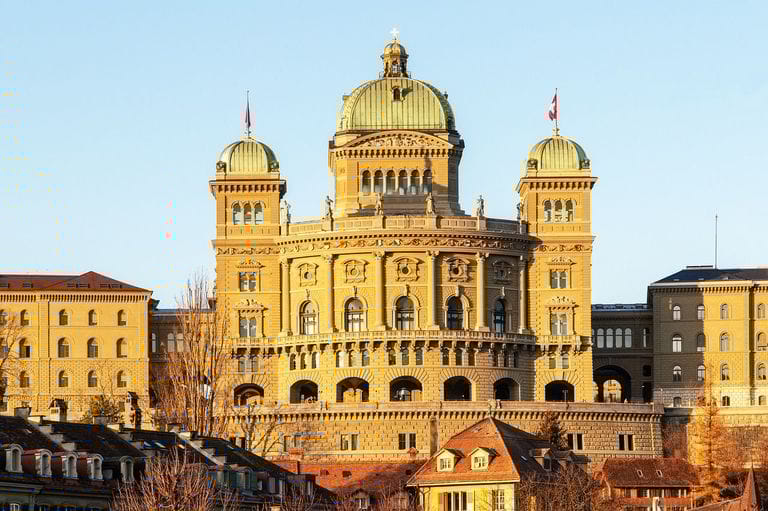
| | Der Bundesrat hat am 12. September 2025 zwei Aussprachen zur Ausgestaltung der Klimapolitik nach 2030 geführt. Zum einen hat er über die Revision des CO2-Gesetzes diskutiert, zum anderen über die rechtlichen Rahmenbedingungen der CO2-Entnahme und -Speicherung. Die Vorlage für das revidierte CO2-Gesetz soll neben Anreizen zur Verminderung von CO2-Emissionen vor allem auf ein zusätzliches Emissionshandelssystem setzen. Weiter / Plus | | | |
| | «Die Schweiz kann ihre Strahlkraft nutzen – auch für den Gletscherschutz»
| |
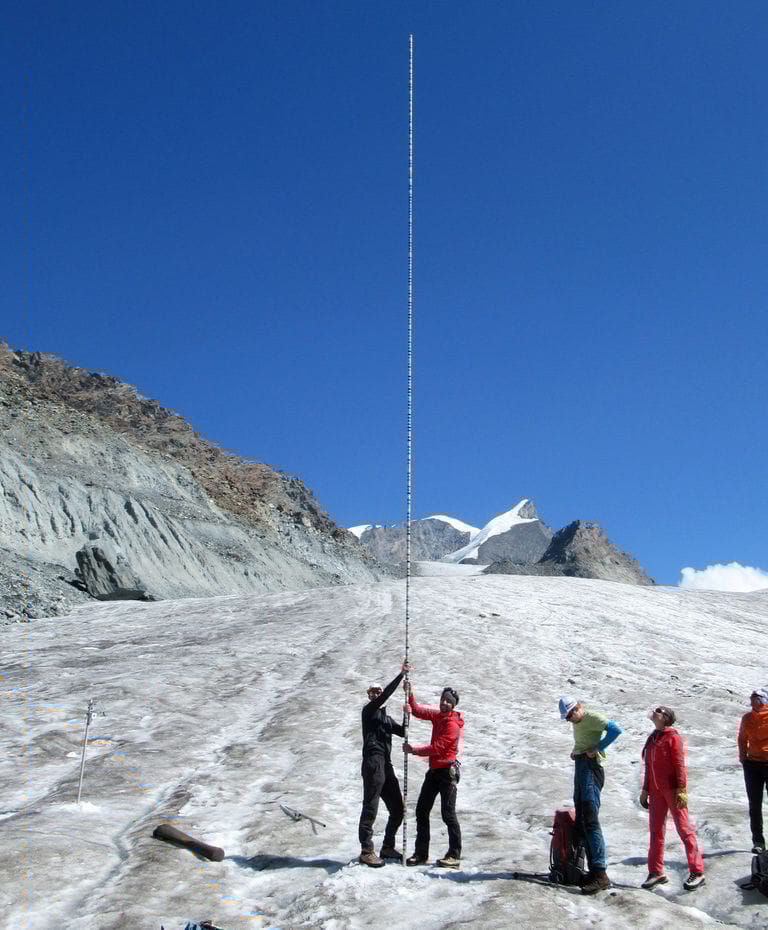
| | Der Klimawandel treibt das Abschmelzen des Eises in den Berg- und Polarregionen voran – mit potenziell verheerenden Folgen für Mensch und Umwelt. Die Schweizer Polar- und Gletscher-forschung gehört zur Weltspitze. Wie die Gletscherforschung weltweit einen substanziellen Beitrag zum Verständnis des globalen Klimawandels und trägt indirekt zum Klimaschutz beiträgt erklärt Prof. Daniel Farinotti, Glaziologe an der ETH Zürich, im Interview. Mehr / Plus / More | | | |
|
| | | 14.10.2025 Kipppunkte beim Klima mit Toralf StaudVortrag, Online ❯❯
| |
| | 24.10.2025 Eröffnungsfeier Agri-PV Forschungsanlage Campus GrüentalVeranstaltung, Wädenswil ❯❯
| |
| | 26.10.2025 Eröffnung «Mensch, Erde! – Das Klima im Wandel»
Ausstellung, Bern ❯❯ | |
| | 27.10.2025 Netto-Null in der Praxis: Fahrpläne für Unternehmen und Gemeinden
Veranstaltung, Bern ❯❯ | |
| | 30.10.2025 Klimaschutz und graue Emissionen - 2. Berner Klimarechtstagung
Tagung, Bern ❯❯ | |
| | 31.10.2025 Bildung für Netto-Null – Wie zukünftige Führungskräfte Netto-Null-Kompetenzen erlangen
Veranstaltung, Bern ❯❯ | |
| | 04.11.2025 Klimazukunft Schweiz
Veranstaltung, Zürich ❯❯ | |
| | 07.11.2025 8. Tagung zum Recht und Management der Energiewirtschaft
Tagung, Luzern ❯❯ | |
| | 07.11.2025 FiBL Kurs Paludikultur: Wirtschaften mit nassen und moorigen Böden
Veranstaltung, Frick ❯❯ | |
| | 26.11.2025 Sustainability Science Forum 2025: Einen gerechten Wandel hin zur Netto-Null-Gesellschaft gestaltenTagung, Bern ❯❯
| |
| | 27.11.2025 Forum Romand de l’Energie
Veranstaltung, Ecublens ❯❯
| |
| | 27. – 28.11.2025 Künstliche Intelligenz in der Umweltbeobachtung und Berichterstattung: Innovation und Verantwortung
Konferenz, Bern ❯❯ | |
| | 28. – 29.11.2025 Klimagipfel für Landwirtschaft und EsskulturVeranstaltung, Landquart ❯❯ | | | |
|
|
|
|
|
| | IPCC: Call for Experts to Review the First-Order Draft of the Special Report on Climate Change and Cities
| |
| | The Intergovernmental Panel on Climate Change (IPCC) is looking for experts to participate in the review of the First-Order Draft (FOD) of the Special Report on Climate Change and Cities (SR Cities). The review period will run from 17 October to 12 December 2025. Interested experts can register now on the IPCC website. Registration closes on 30 November 2025. More
| |
|
| |
|
|
|
| | Zusammenarbeit mit der Klimacommunity und Teilnahme an der 12. Plenarsitzung
| |
| | Für IPBES wird die Zusammenarbeit mit dem Weltklimarat IPCC immer wichtiger. Dazu sucht IPBES gelungene Beispiele der Zusammenarbeit zwischen der Biodiversitäts- und Klima-Community. Entsprechende Beispiele können bis zum 31. Oktober 2025 online eingereicht werden. Die Beispiele werden dann gesammelt und für die Diskussionen an der 12. Plenarversammlung zur Verfügung gestellt. Weiter / Plus / More
| |
|
| |
|
|
|
| | Expressions of Interest for Coordinated Inputs to Support “Mountains” in the IPCC AR7
| |
| | As the IPCC AR7 gets underway, the MRI is calling for expressions of interest for experts interested and willing to engage in coordinated efforts to develop assessment-relevant scientific syntheses and technical analyses on mountains. Deadline to register is Friday 31 October 2025. More
| |
|
| |
|
|
|
| | The Carbon Removal Booster is the first open innovation program in Switzerland created to bring together key stakeholders to jointly develop and test ideas for new solutions needed to address important challenges in the carbon dioxide removal (CDR) space. Deadline 26th October 2025. More
| |
|
| |
|
|
|
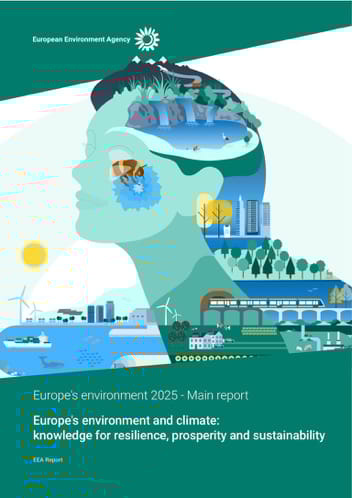
| | Europe’s environment and climate: knowledge for resilience, prosperity and sustainability
| |
| | Significant progress has been made in reducing greenhouse gas emissions and air pollution, but the overall state of Europe’s environment is not good, especially its nature which continues to face degradation, overexploitation and biodiversity loss. The impacts of accelerating climate change are also an urgent challenge, according to the European Environment Agency’s (EEA) most comprehensive, "state of environment" report, published 29 September. The outlook for most environmental trends is concerning and poses major risks to Europe’s economic prosperity, security and quality of life. More
| |
|
| |
|
|
|
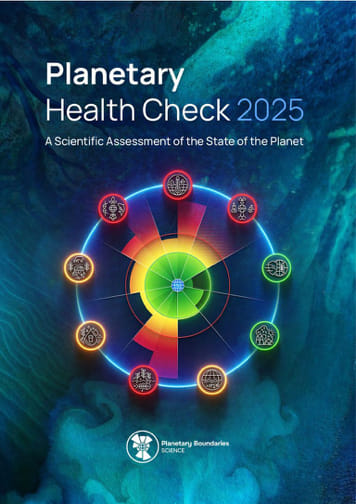
| | Planetary Health Check 2025 | |
| | The Planetary Health Check is a yearly report on the state of our planet. It presents the most up-to-date assessments of the Planetary Boundaries, gives thorough introductions into cutting-edge science, and spotlights especially relevant aspects of our planet's health. In this 2025 edition, special focus is placed on the Ocean's role in the Earth system, and assess for the first time that Ocean Acidification is the seventh transgressed Planetary Boundary. More
| |
|
| |
|
|
|
| | State of Global Water Resources 2024
| |
| | The 2024 edition of the State of Global Water Resources report published by the World Meteorological Organization documents an extraordinary year shaped by record heat, climate extremes, and widespread water-related impacts. With global surface temperatures reaching 1.55 °C above pre-industrial levels, 2024 was the hottest year in the 175-year observational record. Strong El Niño conditions at the start of the year amplified drought in South America and southern Africa, while other regions faced devastating floods. More
| |
|
| |
|
|
|
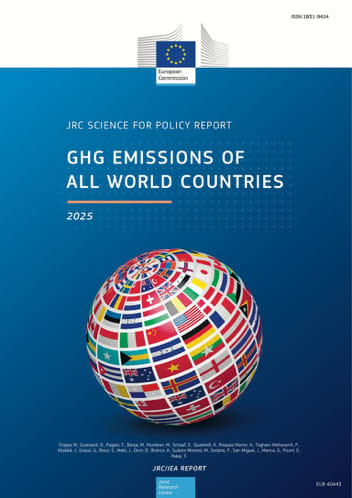
| | GHG emissions of all world countries
| |
| | Global greenhouse gas (GHG) emissions continued their upward trajectory in 2024, reaching a record 53.2 gigatonnes of CO₂ equivalent, according to the latest EDGAR report. Despite decades of climate agreements, fossil CO₂ remains the dominant driver, accounting for nearly three-quarters of global emissions. The report underscores the persistent global challenge: with only two exceptions since 2000—the financial crisis of 2009 and the COVID-19 pandemic in 2020—global emissions have steadily increased, intensifying the pressure to accelerate climate action under the Paris Agreement. More
| |
|
| |
|
|
|
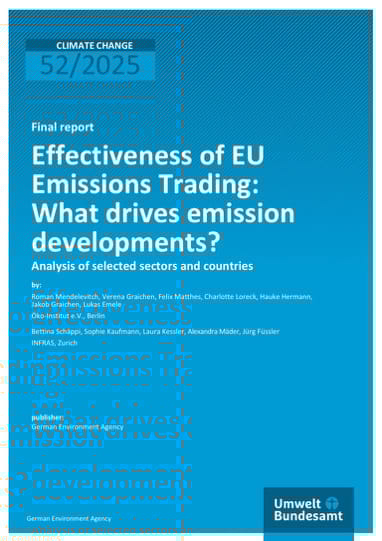
| | Effectiveness of EU Emissions Trading: What drives emission developments?
| |
| | Since its launch in 2005, the EU Emissions Trading System (EU ETS) has significantly reduced greenhouse gas emissions in Europe’s power and industrial sectors. A new report by the German Environment Agency (UBA) shows where the trading system’s price signals have triggered cleaner electricity generation, and where economic demand, fuel choices, or technological pathways have played a stronger role. The analysis of steel, cement, refining and combustion sectors highlights both the successes of emissions trading and the challenges ahead for a climate-neutral industry. More | |
|
| |
|
|
|
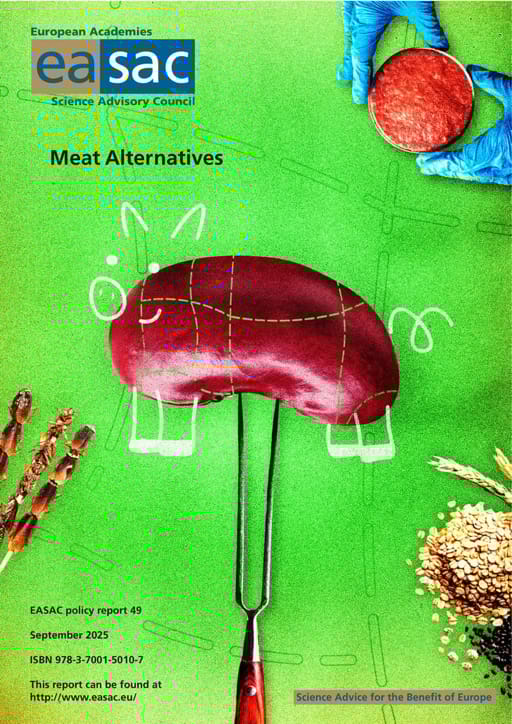
| | The European Academies Science Advisory Council (EASAC) published a comprehensive report on meat alternatives. As the EU is mulling a Protein Strategy to bolster sustainable food systems, the report examines the fast-growing world of meat alternatives, from plant-based and insect-derived proteins to microbial fermentation and cultivated meat. More | |
|
| |
|
|
|
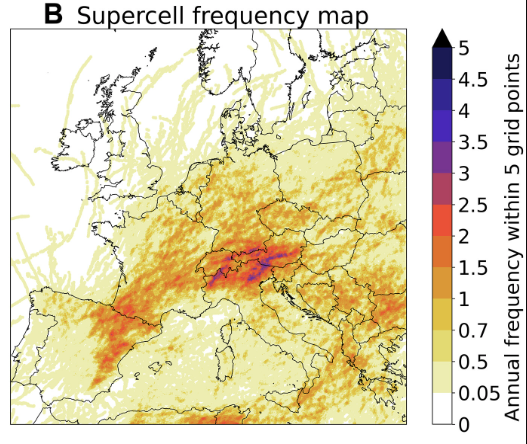
| | Fig. Annual average supercell frequency 2011–2021, within five grid points.
| | | |
|
| | | | | Forschungsimpuls des MonatsThe current climate shows several hundred supercells per convective season. Occurrence peaks are colocated with complex topography, e.g., the Alps. The absolute frequency maximum lies along the southern Alps and minima over the oceans and flat areas. Comparing a current-climate simulation with a pseudo–global warming +3°C global warming scenario, the future climate simulation shows an average increase of supercell occurrence by 11%.
- M. Feldmann, M. Blanc, K. Brennan et al.
European supercell thunderstorms—A prevalent current threat and an increasing future hazard
| | | |
|
|
|
|
|
| |
Akademie der Naturwissenschaften Schweiz (SCNAT)
Forum für Klima und globalen Wandel (ProClim) | |
|
|
|
|