| | Forum for Climate and Global Change (ProClim)
Newsletter on climate and energy No 0202.03.26 | |
|
|
|
| | Prof. Dr. Karin Ingold, President of ProClim, Co-Director of NCCR Clim+
| | | |
|
| | | Hello , Heavy rainfall and flooding, prolonged heat waves... Extreme weather and climate events are no longer the exception, but a reality in Switzerland too. Cities are just as affected as rural regions and mountain areas. These developments make it clear that targeted, forward-looking strategies for adapting to climate change are needed. This is precisely where the new NCCR CLIM+ research focus comes in, which is being funded by the Federal Department of Economic Affairs, Education and Research (EAER) alongside five other topics of strategic importance to Switzerland. I am delighted to be leading the long-term research project as a representative of the University of Bern, together with Sonia Seneviratne from ETH Zurich. With this project, our aim is to go beyond the problem analysis: I see it as a particular added value that we will be working with researchers from the natural and social sciences in an interdisciplinary and transdisciplinary manner to find concrete solutions for a climate-resilient future. I look forward to continuing to promote cooperation at this important interface between researchers and decision-makers in my research as well as in my role as ProClim president. | | | |
| |  | | | |
|
|
|
|
|
| | Register now for the Swiss Global Change Day 2026
On 15 April 2026, climate scientists will gather for the 26th Swiss Global Change Day. The event offers a unique opportunity to exchange ideas with colleagues from all over Switzerland. Four high-profile keynote speakers will provide insights into the latest developments in climate research. Another highlight will be the Science Talk, which this year will discuss disinformation and political influence on research in Switzerland. In addition, the poster session offers young researchers an ideal opportunity to present their research. The best poster for each of the three categories will be awarded a prize worth CHF 1,000. You can register for the 26th Swiss Global Change Day until 12. April 2026. Stay up to date here! | |
|
|
|
| |
Cities are particularly affected by the consequences of climate change. Although the awareness of this problem in Switzerland is high, adaptation measures are often still insufficiently implemented. Among other things, clearer responsibilities and explicit legal requirements are needed. In the future, cities must be planned and built in a climate-adapted way. But what exactly does that mean? This question and more are explored in this flash article. (Available in German)
| |
|
| |
|
|
|
| | NCCR Clim+: New Centre of Competence in Research | |
| | NCCR CLIM+ and the new Center for Climate Extremes and Resilience in Swiss Society (CERESS) will unite expertise from both the natural and social sciences through truly innovative inter- and transdisciplinary research. Together, NCCR CLIM+ and CERESS will inform Swiss policymakers and the public about physical climate risks and develop adaptation solutions that account for societal trade-offs and co-benefits across key sectors. With its unique research consortium, NCCR CLIM+ will support Switzerland's effective transformation towards a more resilient and safer future. For further information on projects, job vacancies, etc., please visit the NCCR Clim+ website.
| | | |
| | «NCCS-Impacts» reaches an important milestone
| |
| | NCCS Impacts has reached a key milestone. Over the past three years, several projects have developed practical foundations for climate services based on the consequences of climate change. These are intended to serve as a basis for decision-making by stakeholders in politics, administration, the private sector, and research when it comes to climate adaptation and climate protection measures. The results of the projects will be published in the coming months and compiled in an overview in fall 2026. Follow NCCR on LinkedIn or visit their website regularly to stay up to date. | | | |
| | Record-breaking sediment core may help predict Antarctic ice loss
| |
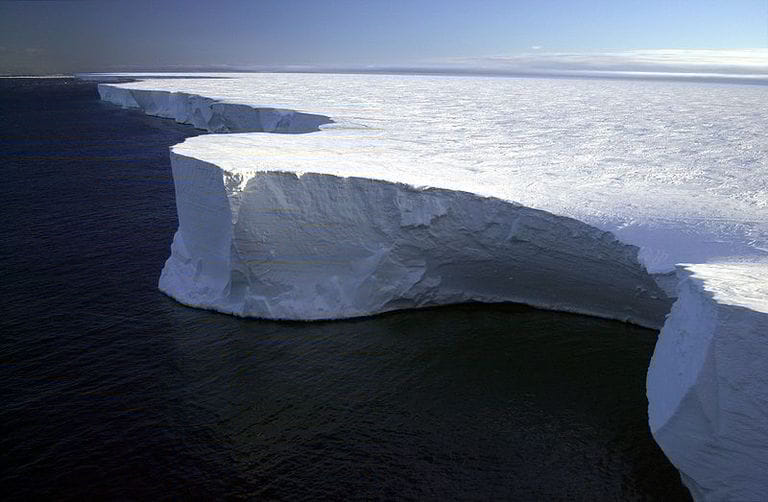
| | An international research team co-led by a researcher from ETH Zurich and the Swiss Federal Institute for Forest, Snow and Landscape Research (WSL) has recovered the longest sediment core ever drilled from beneath an ice sheet. The core preserves evidence of climate changes spanning millions of years and will help improve predictions of how the West Antarctic Ice Sheet may respond to ongoing global warming. Find out more
| | | |
|
| | | 05.03.2026 Using weather satellites to track emissions and atmospheric chemistry: Capabilities and future prospects
Lecture, Zürich ❯❯ | |
| | 05.03.2026 When AI Meets Sustainability: Environmental, Social and Ethical Perspectives
Lecture, Lausanne ❯❯ | |
| | 11.03.2026 Challenge-to-Solution Workshop 2Workshop, Lausanne ❯❯
| |
| | 11.03.2026 Book Launch: The Future of Climate Litigation
Lecture, Zurich ❯❯ | |
| | 12.03.2026 Compound climate events under global warming
Lecture, Zürich ❯❯ | |
| | 19.03.2026 Corporations at Climate Crossroads: Multilevel Governance, Public Policy, and Global Climate Action
Lecture, Zürich ❯❯ | |
| | 02.04.2026 Changes in European storm frequency under climate change
Lecture, Zürich ❯❯ | |
| | 15.04.2026 26th Swiss Global Change Day
Symposium, Bern ❯❯ | | | |
|
|
|
|
|
| | Adaptation to climate change funding programme – Adapt+: Applications
| |
| | the Confederationhas launched the Adapt+ funding programme to promote measures for adapting to climate change. Under the leadership of the Federal Office for the Environment (FOEN), the Confederation is therefore supporting the implementation of specific adaptation measures. The application window is until the 31. March 2026. Read more here
| |
|
| |
|
|
|
| | Call: Engaged UniBE 2026 – Transdisciplinary Projects for Sustainable Development
| |
| | With the Engaged UniBE Call, the University of Bern supports innovative, transdisciplinary projects that make a concrete contribution to the Climate Roadmap 2030 and advance the sustainable transformation of science and society. The deadline for submitting project ideas is 30. April 2026. Read more here
| |
|
| |
|
|
|
| | Call for Abstracts for ICOS Science Conference 2026
| |
| | ICOS Science Conference 2026 takes place 15-17 September 2026 in AF Borgen in Lund, Sweden, and online. The overarching theme of this year's conference is "Science, Data, Services: Together for Climate Action" with sessions covering ICOS's three domains - Atmosphere, Ecosystem and Ocean. The session themes also encompass various topics that span across the scientific domains. The abstract submission deadline is 6. March 2026. Read more here
| |
|
| |
|
|
|
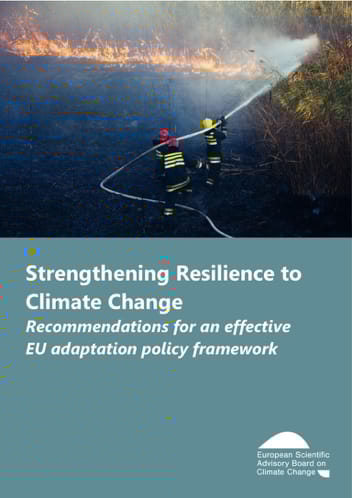
| | Strengthening Resilience to Climate Change
| |
| | As Europe faces increasingly severe climate impacts, including rising loss of life, economic damages and ecosystem harm, the European Scientific Advisory Board on Climate Change calls on the EU to urgently strengthen its policy framework for effective and coherent adaptation. This report sets out how the EU can strengthen its approach to climate adaptation in the face of escalating and increasingly systemic climate risks. Read more here
| |
|
| |
|
|
|
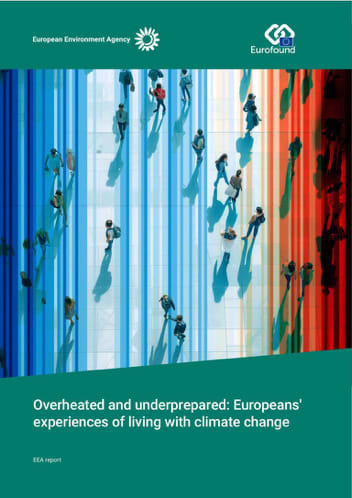
| | Overheated and underprepared: Europeans' experience of living with climate change
| |
| | This report was jointly developed by the European Environment Agency (EEA) and the European Foundation for the Improvement of Living and Working Conditions (Eurofound) and is based on the findings from an online survey. It explores the experiences of climate-related impacts, resilience actions taken at home, the perception of local actions implemented, and concerns about future impacts among a sample of Europeans. Read more here
| |
|
| |
|
|
|
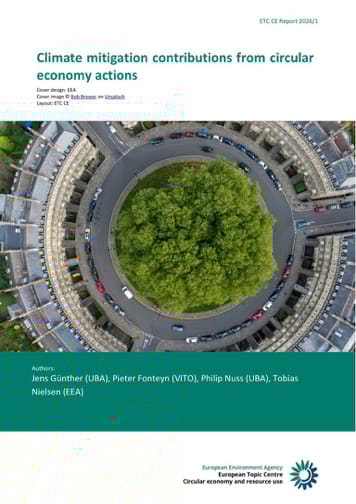
| | Climate mitigation contributions from circular economy actions
| |
| | There is growing awareness of the key role that the circular economy can play in reducing greenhouse gas emissions based been a notable increase in publications exploring the intersection of CE and climate mitigation and adaptation. This recent surge in research and political attention makes it a timely moment to take stock of existing findings and assess the climate mitigation potential of circular economy actions. Read more here
| |
|
| |
|
|
|
| | The State of Energy Innovation 2026
| |
| | The second edition of The State of Energy Innovation turns the spotlight on the technologies, policies and funders at the forefront of energy technology development. It provides a comprehensive assessment of recent progress and emerging challenges in energy technology innovation, drawing on over 150 innovation highlights from 2025 and a survey of practitioners across more than 40 countries. It analyses trends in public and corporate R&D spending, venture capital flows, patenting and policy. Read more here | |
|
| |
|
|
|
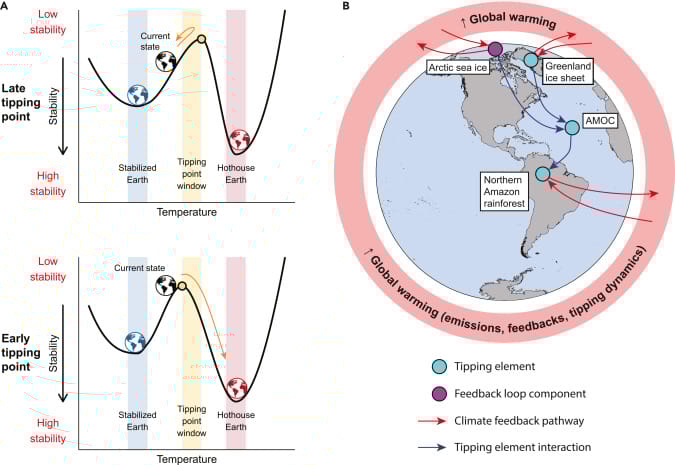
| | Fig. Tipping point uncertainty and hothouse trajectory risk | | | |
| | Research impulse of the month
«Earth’s climate is now departing from the stable conditions that supported human civilization for millennia. Crossing critical temperature thresholds may trigger self-reinforcing feedbacks and tipping dynamics that amplify warming and destabilize distant Earth system components. Uncertain tipping thresholds make precaution essential, as crossing them could commit the planet to a hothouse trajectory with long-lasting and potentially irreversible consequences.»- Ripple, William J. et al., 2026 Read the full reasearch article here: The risk of a hothouse Earth trajectory | | | |
|
|
|
| |
Swiss Academy of Sciences (SCNAT) Forum for Climate and Global Change (ProClim) | |
|
|
|
|