| | Forum for Climate and Global Change (ProClim)
Newsletter on climate and energy No 0427.04.26 | |
|
|
|
| | Filippo Lechthaler, Head of ProClim | | | |
|
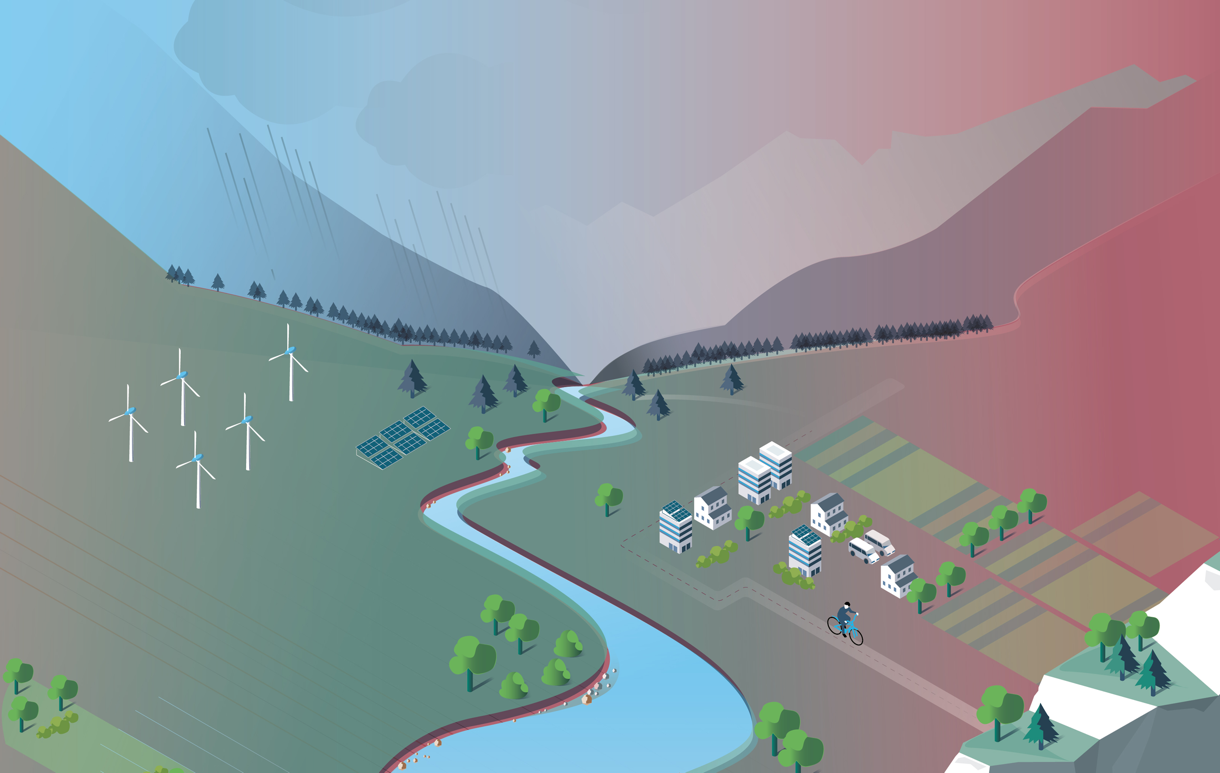
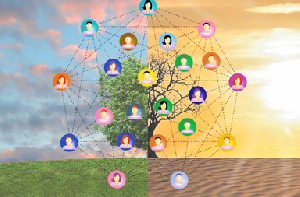
| | | Hello , The fact that scientific findings, methods and results are heavily influenced by the circumstances in which they are produced became particularly apparent at the 26th edition of the Swiss Global Change Day. From climate models and data sets that rely on internationally connected research infrastructures, over polar research in Siberia, which has been complicated by the Russian invasion of Ukraine, to the spread of misinformation and disinformation on climate issues, which is further fuelled by geopolitical developments: Current global political tensions are having a tangible impact on national and international climate research. We drew on the swarm intelligence of the assembled speakers, early-career researchers, and event participants to discuss possible courses of action for countering these trends and addressing the challenges posed by the current geopolitical situation. Thus, despite many difficult topics, the 26th Swiss Global Change Day also allowed for a hopeful look into the future. This forward-looking perspective inevitably focuses on Switzerland as well: where do we stand today in dealing with climate change – and what questions arise for the future? The recently published report "Spotlight on climate in Switzerland" provides an overview. We’ll keep at it! | |
 |
|
|
|
|
|
| | © Marina Bräm, viz. bybraem | |
| | New publication: "Spotlight on climate in Switzerland 2026" The latest report from the Swiss Academies of Science (SCNAT) provides an up-to-date overview of the most important scientific findings on climate change. The focus is on knowledge specific to Switzerland. ✓ The most important scientific findings on climate change: a reference work for politics, public administration, business, education, and civil society ✓ Information on the current state and future development of climate change, its consequences and risks, as well as measures for mitigation and adaptation and further options for action ✓ Presented in an interactive format and broadly supported, with the involvement of around 60 researchers Read the report here (short report available in EN, full report in GER and FR): brennpunkt-klima.ch | | | |
|
|
|
| | Meeting Report 26th Swiss Global Change Day
The 26th Swiss Global Change Day took place on 15 April. We learnt about high-resolution climate models, Arctic ecosystems and disinformation on climate issues, and received proposals for action regarding the future of climate science in a 1.5 degrees warmer world amid political obstruction. At the Science Talk, attendees discussed the state of disinformation and the resilience of Swiss institutions in strengthening research. Did you miss the event but would like to find out more about these topics? Or were you there and would like to read up on something specific from the presentations? Or simply get a few impressions of the day? Then read the meeting report here. P.S. Did you take part in the 26th Swiss Global Change Day? If so, we’d be grateful for your feedback: https://proclim.scnat.ch/en/id/4trMv | |
|
|
|
| |
A key challenge in science communication is that social and political discourse is often not primarily about facts, but about judgements and values, emotions and interests. Furthermore, a new approach is needed when it comes to the means and forms of communication: visual and interactive forms of communication have been complementing plain text for some time now and, in some cases, have replaced it entirely. Read more on this topic in this Flash article (available in German).
| |
|
| |
|
|
|
| | Agreement on Climate Change, Trade and Sustainability: Consultation launched
| |
| | On 1 April 2026, at the request of the Council of States’ preliminary consultation committee, the Federal Council launched the consultation process on the Agreement on Climate Change, Trade and Sustainability (ACCTS). This agreement sends an important signal regarding the integration of trade policy and climate protection. The ACCTS establishes a binding framework that combines economic opportunities with environmental responsibility and makes a targeted contribution to achieving global environmental and climate goals. Find out more
| | | |
|
| | | 30.04.2026 Climate Career Evening 2026
Event, Bern ❯❯ | |
| | 30.04.2026 Mini-Boot Camp: Swiss Politics & Scientific Engagement
Event, Zürich ❯❯ | |
| | 04.05.2026 Climate Change, Human Rights and the Epistemic Duty of Care
Lecture, Fribourg ❯❯ | |
| | 04.-09.05.2026 Climate Week Zurich
Event, Zürich ❯❯ | |
| | 06.05.2026 Talking Climate: How to have impactful conversations on climate change - in theory and practice!
Workshop, Zürich ❯❯ | |
| | 11.-13.05.2026 PAGES IMPACT workshop 2026Workshop, Zürich ❯❯
| |
| | 18.-20.05.2026 Feminist Perspectives on Climate Research Workshop
Workshop, Bern ❯❯
| |
| | 28.-30.05.2026 ForumAlpinum 2026Conference, Aosta Valley ❯❯
| | | |
|
|
|
|
|
| | Call: proposals for the SWEETER funding instrument | |
| | The Swiss Federal Office of Energy (SFOE), in collaboration with the Swiss Federal Office for the Environment (FOEN), is launching the first call for proposals for the SWEETER funding instrument. The theme is ‘Energy- and resource-efficient industrial processes’. The submission is possible until 30. June 2026. Read more here
| |
|
| |
|
|
|
| | Call: Environmental Research Prize 2026 Fribourg University
| |
| | The Environmental Research Prize of Fribourg University aims to promote disciplinary and interdisciplinary research in the field of environmental sciences and sustainability. The prize is awarded to young researchers whose innovative and outstanding scientific work contributes significantly to a better understanding of environmental problems and their solution. The submission for the prize 2026 is possible until 30. June 2026. Read more here
| |
|
| |
|
|
|
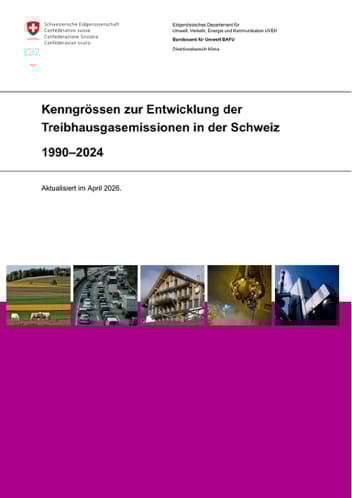
| | Switzerland's greenhouse gas inventory 1990–2024
| | | |
| | The greenhouse gas inventory contains comprehensive emissions statistics in accordance with the requirements of the UN Climate Convention. Switzerland's national and international reduction targets are assessed on this basis. The inventory details Switzerland's greenhouse gas emissions according to the territorial principle and provides a breakdown by gas, sector and individual emission source. It also contains information on greenhouse gas emissions from international aviation and navigation and the greenhouse gas balance of land use (soil, vegetation). The greenhouse gas inventory is updated annually in April with data from the year before last. Find out more
| | | |
|
| |
|
|
|
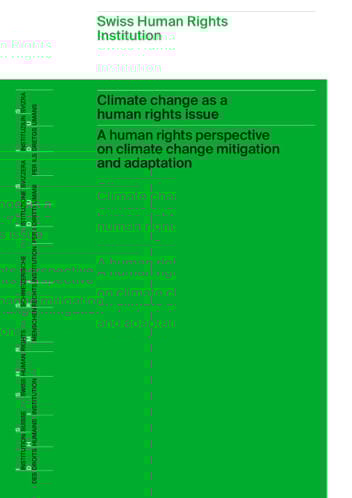
| | Climate change as a human rights issue
| |
| | Temperature increases, more frequent extreme weather events and rising sea levels have direct impacts on human rights, particularly the rights to life, health, food, clean water and housing. The SHRI’s study on “Climate change as a human rights issue” presents an analysis of Switzerland’s human rights obligations in the area of climate change mitigation and adaptation. The accompanying policy brief (in German) demonstrates that climate policy and legislation are not just technical and economic issues, but are also an integral part of human and fundamental rights policy. Find out more
| |
|
| |
|
|
|
| | Global Energy Review 2026
| |
| | This edition of the Global Energy Review provides the first full assessment of trends across the entire energy sector in 2025, with data for all fuels and technologies, all regions and major countries, and energy-related carbon dioxide (CO2) emissions. The report covers estimates of energy demand by region and by source and fuel in 2025; developments in electricity demand and supply; deployment of selected energy technologies; and estimates of energy-related CO2 emissions. The report also assesses trends in energy intensity and analyses the impact of factors, such as weather effects, on energy demand and emissions. Read more here
| |
|
| |
|
|
|
| | State of Energy Policy 2026 | |
| | This report provides with a unique review of policy progress made in 2025 across all energy sectors and instruments, with a special focus on government spending, energy efficiency regulations, and the contribution of the energy sector to nationally determined contributions and long-term net zero pledges. This year’s report brings an extensive examination of energy security policies to the period 1973-2025, from oil and natural gas to clean energy technology supply chains and critical minerals. It also spotlights the policy momentum around energy access, most particularly in sub-Saharan Africa. Read more here
| |
|
| |
|
|
|
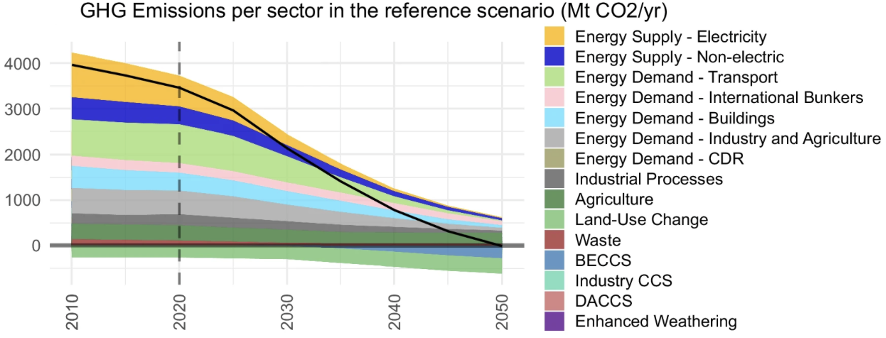
| | Fig. Sectoral breakdown of gross GHG emissions in the reference scenario (Mt CO₂/yr). | | | |
| | Research impulse of the month
«The European Green Deal aims to make the EU climate-neutral by 2050 through a broad set of policies. While targets up to 2030 are largely in place, defining interim goals for 2040 is a key next step. Model-based analysis suggests that reducing emissions by around 86% by 2040 (compared to 1990) would align with a cost-efficient pathway to climate neutrality. Achieving this will require major changes in the energy system, including a strong expansion of wind and solar power, a higher share of electricity in final energy use, and increased deployment of carbon capture and storage (CCS).»
- Rodrigues R., et al. Read the full reasearch article here: 2040 greenhouse gas reduction targets and energy transitions in line with the EU Green Deal | |
|
|
|
| |
Swiss Academy of Sciences (SCNAT) Forum for Climate and Global Change (ProClim) | |
|
|
|
|