| | Forum for Climate and Global Change (ProClim)
Newsletter on climate and energy No 0330.03.26 | |
|
|
|
| | Patricia Ricklin, Event Coordinator Swiss Global Change Day | | | |
|
| | | Hello , The big day is almost here: on 15 April 2026, the Swiss climate research community will come together for Swiss Global Change Day. Once again this year, we were keen to address current climate topics in all their diversity. How do high-resolution climate models provide us with the information needed to tackle climate change? How do disinformation and political influence affect research in Switzerland? What consequences do new drivers of global change in the Arctic have for its biodiversity and ecosystem functions? And what challenges does climate research face in a world that continues to warm, while at the same time encountering political headwinds? For me, it is precisely this breadth of topics that makes Swiss Global Change Day particularly valuable. Just as important as interdisciplinary exchange is the dialogue between different generations of climate researchers. It is therefore particularly important to us to give early-career researchers visibility through the Poster Contest and to foster their networking within the community. I am very much looking forward to the 26th Swiss Global Change Day and to the encounters, discussions, ideas and perhaps even joint projects that will emerge from it. | | | |
| |  | | | |
|
|
|
|
|
| | © Marina Bräm, viz. bybraem | |
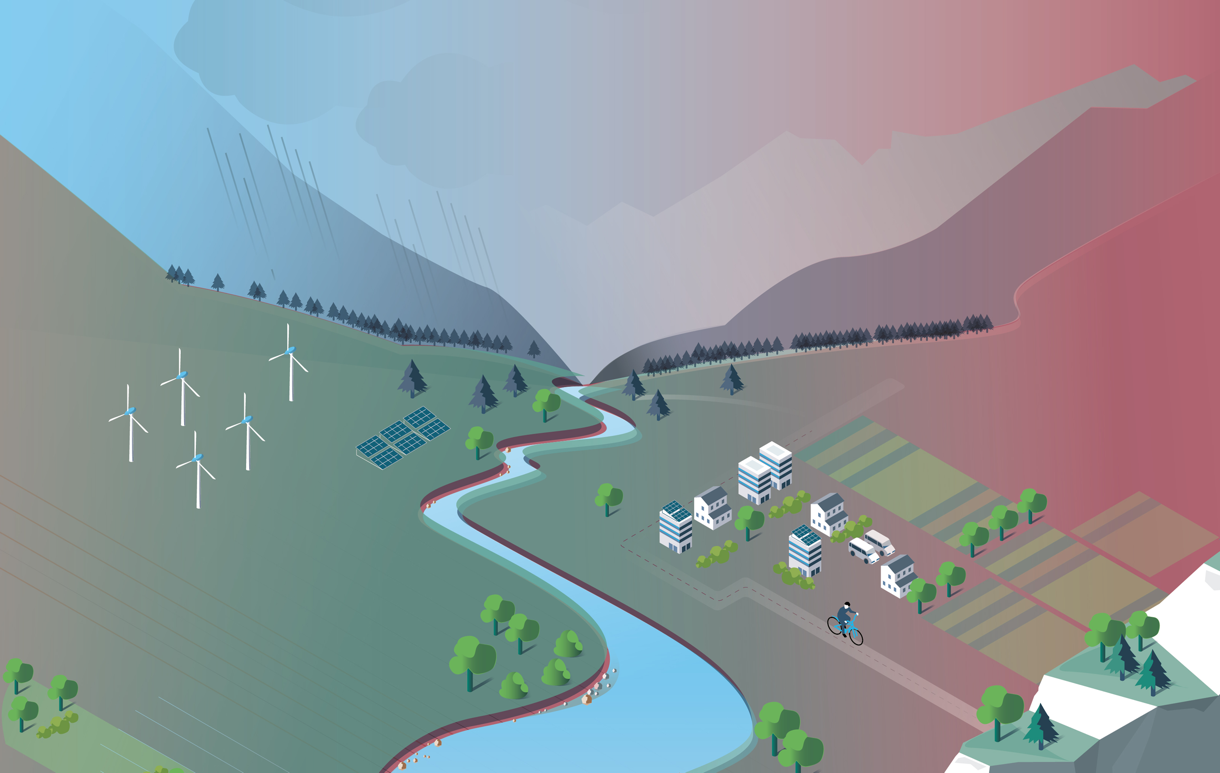
| | Coming soon: "Climate Focus Switzerland" will be published on 9 April 2026Switzerland is currently warming at more than twice the global average rate – what are the consequences, and what options are available for tackling climate change? The latest report from the Swiss Academy of Sciences (SCNAT) will provide an up-to-date overview of the most important scientific findings on climate change, with a focus on Switzerland. Around 60 researchers have contributed to this comprehensive synthesis of Swiss climate science, the last of which was carried out in 2016. The online report (available in German and French) can be filtered by topic or geographical focus. The accompanying short report (available in English, German, and French) summarises the key findings for decision-makers. Stay tuned: the report will be published on 9 April 2026.
| | | |
| |  | | | |
| | Last Call: Register now for the Swiss Global Change Day 2026
On 15 April 2026, climate scientists will gather for the 26th Swiss Global Change Day. The event offers a unique opportunity to exchange ideas with colleagues from all over Switzerland. Four high-profile keynote speakers will provide insights into the latest developments in climate research. Another highlight will be the Science Talk, which this year will discuss disinformation and political influence on research in Switzerland. In addition, the poster session offers young researchers an ideal opportunity to present their research. The best poster for each of the three categories will be awarded a prize worth CHF 1,000.The deadline for entries to the poster competition is 31 March. You can register for the 26th Swiss Global Change Day until 12 April 2026. Stay up to date here! | |
|
|
|
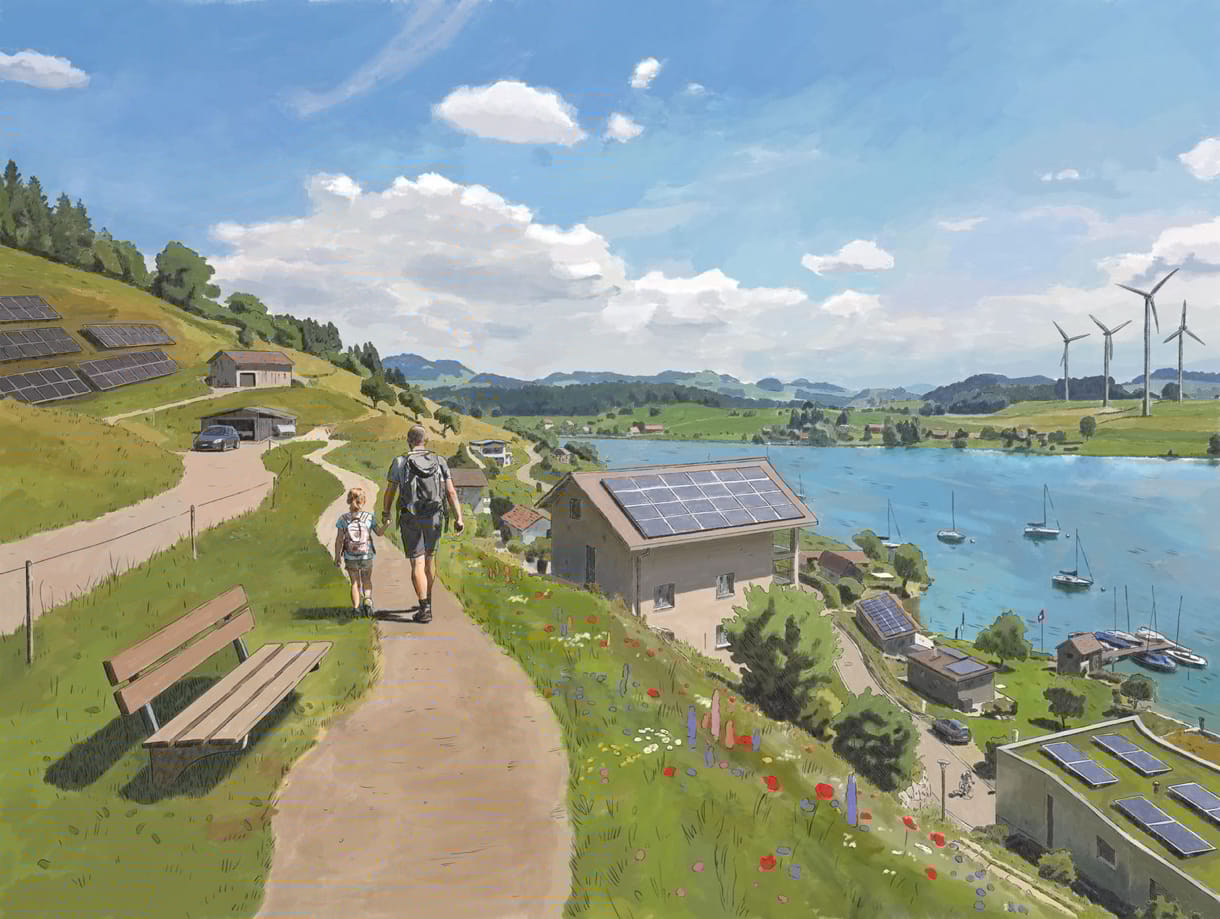
| | Climate change affects the landscape: practical knowledge from experience and researchFrom droughts to heavy rainfall and retreating glaciers – climate change is altering Switzerland's landscapes. At the same time these landscapes protect us from the consequences of climate change, such as flooding and avalanches. How can we safeguard these landscape services in the future? A new factsheet from the Swiss Academy of Sciences (SCNAT) presents viable solutions and specific projects from the field. Find out more
| |
|
|
|
| |
Fake news, misinformation and disinformation, conspiracy theories: the COVID-19 pandemic serves as a prime example of how false – and in some cases deliberately misleading – information circulates in the public sphere. This is not fundamentally new. Such 'infodemics’, as the WHO calls them, have occurred in previous crises. And the public debate on climate change is also rife with them. Find out more in this Flash article. (Available in German and French)
| |
|
| |
|
|
|
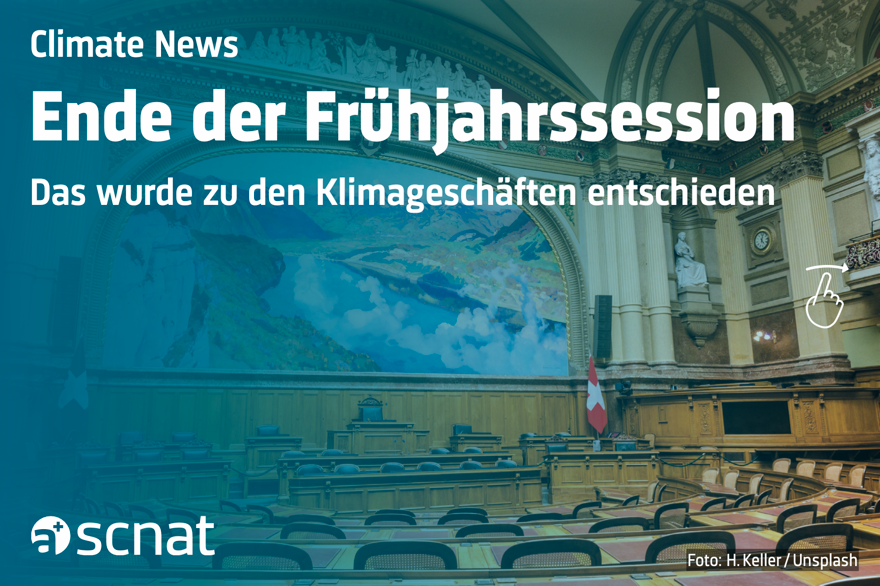
| | The Swiss spring parliamentary session took place from 2 to 20 March 2026. The National Council and the Council of States dealt with several climate and energy items of business – for example, the Blackout Initiative and a motion for an energy storage strategy. The cost-cutting measures debated as part of the federal budget relief programme also affect the climate and energy sector. We have compiled an overview for you in this LinkedIn post of what the two chambers decided on these items of business. (Available in German and French)
| | | |
| | Switzerland's energy supply is assured
| |
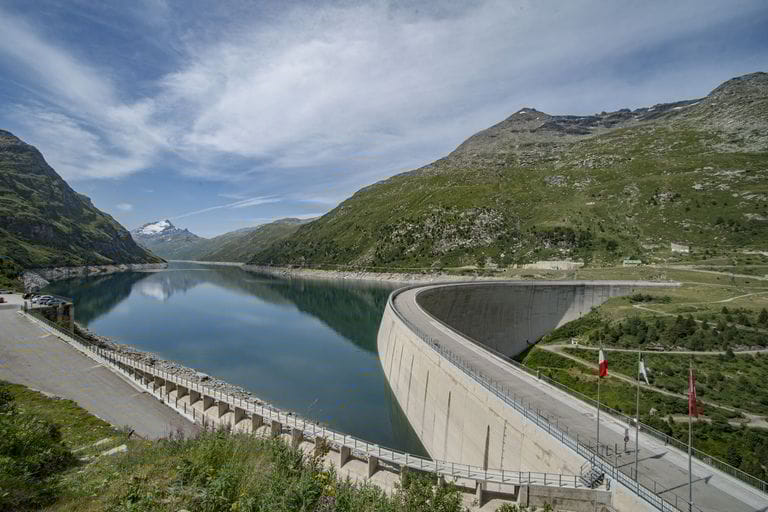
| | The escalation of the situation in the Middle East has led to higher energy prices and is already having a noticeable impact on the global energy supply. However, Switzerland’s energy supply is assured at the present time. Given the stable supply situation in Switzerland at the present time, the Federal Council has no legal basis for intervening in the market. In the event of an impending or existing severe shortage, pre-planned measures – such as the release of compulsory stockpiles – will be implemented. Find out more
| | | |
|
| | | 02.04.2026 Changes in European storm frequency under climate change
Lecture, Zürich ❯❯ | |
| | 13.04.2026 Understanding human behavior and the role of science in a changing climate
Lecture, Kastanienbaum ❯❯ | |
| | 15.04.2026 26th Swiss Global Change Day
Symposium, Bern ❯❯ | |
| | 25.04.2026 Storytelling Workshop for Climate Storytelling Night
Workshop, Zürich ❯❯ | |
| | 30.04.2026 Mini-Boot Camp: Swiss Politics & Scientific Engagement
Event, Zürich ❯❯ | |
| | 04.-09.05.2026 Climate Week Zurich
Event, Zürich ❯❯ | |
| | 11.-13.05.2026 PAGES IMPACT workshop 2026Workshop, Zürich ❯❯
| |
| | 18.-20.05.2026 Feminist Perspectives on Climate Research Workshop
Workshop, Bern ❯❯
| | | |
|
|
|
|
|
| | Call: Engaged UniBE 2026 – Transdisciplinary Projects for Sustainable Development
| |
| | With the Engaged UniBE Call, the University of Bern supports innovative, transdisciplinary projects that make a concrete contribution to the Climate Roadmap 2030 and advance the sustainable transformation of science and society. The deadline for submitting project ideas is 30. April 2026. Read more here
| |
|
| |
|
|
|
| | Call: Environmental Research Prize 2026 Fribourg University
| |
| | The Environmental Research Prize of Fribourg University aims to promote disciplinary and interdisciplinary research in the field of environmental sciences and sustainability. The prize is awarded to young researchers whose innovative and outstanding scientific work contributes significantly to a better understanding of environmental problems and their solution. The submission for the prize 2026 is possible until 30. June 2026. Read more here
| |
|
| |
|
|
|
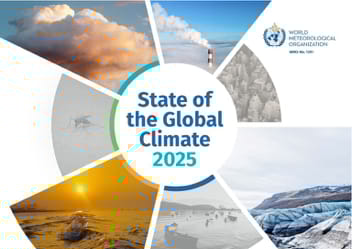
| | State of the Global Climate 2025 report | | | |
| | This WMO report provides a summary on the state of the climate indicators in 2025 with sections on key climate indicators, extreme events and impacts. The indicators include global temperatures, greenhouse gas concentration, ocean heat content, sea level rise, ocean acidification, Arctic and Antarctic sea ice, glaciers, precipitation, with an analysis of major drivers of inter-annual climate variability during the year including the El Niño Southern Oscillation and other ocean and atmospheric indices. Read more here
| | | |
|
| |
|
|
|
| | Switzerland’s environmental footprints: Trends between 2000 and 2023
| |
| | A new study commissioned by the FOEN on Switzerland’s environmental footprints from 2000 to 2023 shows that the total environmental impact per person has fallen by around a fifth since 2000. In absolute terms, however, it has remained largely unchanged over the period under review. The development of the footprints has been compared with current scientific findings on ecological carrying capacity limits as well as Switzerland’s environmental objectives, in order to identify the need for action from a footprint perspective. Read more here
| |
|
| |
|
|
|
| | Energy Technology Perspectives 2026 | |
| | This report examines demand-side dynamics for energy technologies — such as deployment trends and policy developments — as well as supply-side factors, including manufacturing capacity and trade flows, underpinned by robust modelling and quantitative analysis. This year’s edition puts a special focus on vulnerabilities in energy technology supply chains and industrial competitiveness, analyzing manufacturing cost structures and industrial policy impacts. Read more here
| |
|
| |
|
|
|
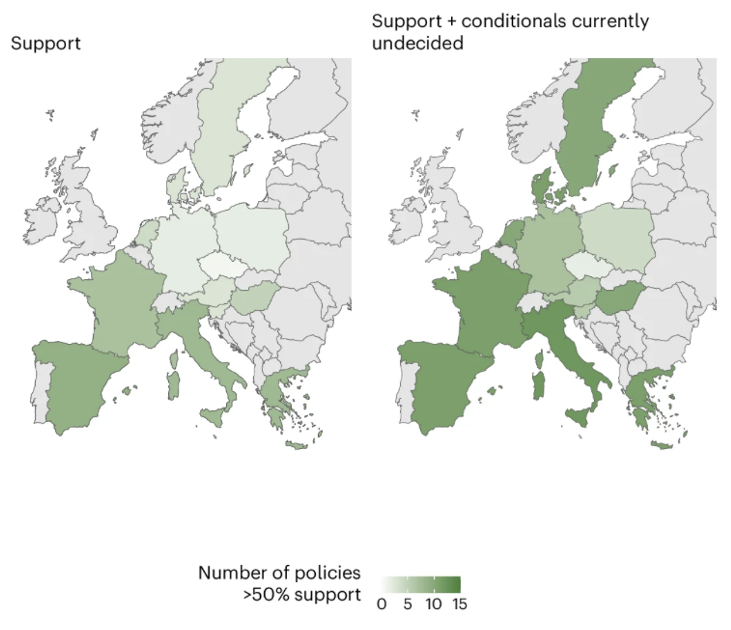
| | Fig. The number of policies that would be accepted (i.e. receive more than 50% support) increases in every country investigated if the neutral respondents are included
| | | |
|
| | | | | Research impulse of the month
‘The feasibility of implementing climate policies relies on citizen support. While recent efforts have focused on shifting the attitudes of policy opponents, little is known about the middle group who neither reflexively endorse nor reject mitigation measures. The potential shift of conditionals plays a vital role in shaping overall patterns of public policy support and electoral outcomes.’- Keith, Smith E. et al., 2026
| | | |
|
|
|
|
|
| |
Swiss Academy of Sciences (SCNAT) Forum for Climate and Global Change (ProClim) | |
|
|
|
|