| | Forum for Climate and Global Change (ProClim)
ProClim Briefing No 11
04.12.25 | |
|
|
|
| | Severin Marty, Project Lead at ProClim | | | |
|
| | | Hello , COP30 in Brazil ended about a week ago. It did not bring us an early Christmas present in the form of a phase-out of fossil fuels. Rather, the event is reminiscent of the butler's repeated stumbling in “Dinner for One.” But there is no point in sinking into apathy in the end-of-year blues. There are also a few positive signals coming out of Belém. We have compiled the results for you here and put together articles with voices from the scientific community that put these results into context. And finally, an international agreement in Belém is not a prerequisite for us to make progress at the national and local levels. In this briefing, for example, we show how seasonal energy storage can contribute to the decarbonization of the energy system. An important step on the road to net zero. | |
|
|
|
|
|
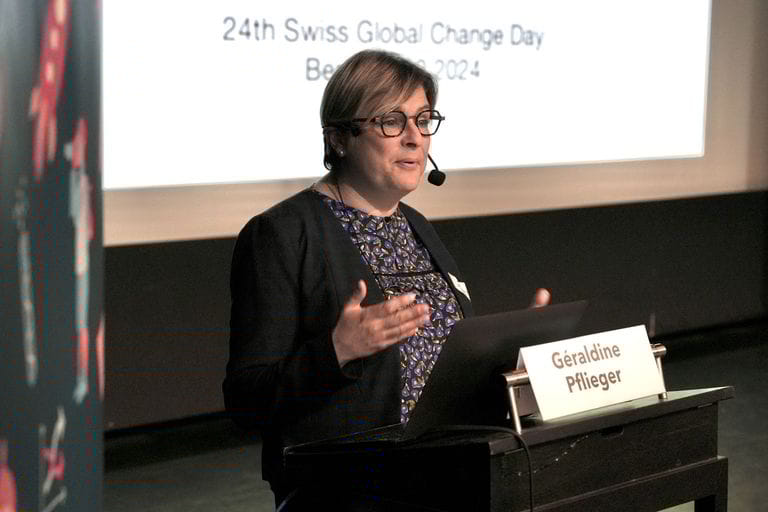
| | COP30 in Belém: Checking in with… Géraldine Pflieger
Last week, the 30th United Nations Climate Change Change Conference (COP30) took place in Belém, Brasil. Amongst the official Swiss delegation was Géraldine Pflieger, representing the scientific perspective. She is a is a professor of urban and environmental policy at the University of Geneva. After the conference, we were to get a short scientific assessment of what was – or was not – decided at COP30. More
| |
|
|
|
| |
By 2050, transportation, buildings, electricity production—in fact, Switzerland's entire energy system—are to become climate neutral. This will require efforts in all areas. Read this Flash article to find out how a coordinated approach across all energy sectors and good relations with other countries play a role in this.
| |
|
| |
|
|
|
| | COP30: No agreement on roadmap for phasing out oil and gas
| |
| | The 30th UN Climate Change Conference (COP30) in Belém, Brazil, came to an end on November 22, 2025. The 194 signatory states discussed the national climate targets they had set for reducing greenhouse gases, as well as measures to accelerate the implementation of climate protection and close the gap to the 1.5-degree target. Despite intensive negotiations, the countries were unable to agree on a roadmap for the global phase-out of fossil fuels such as oil, coal, and gas. Progress was made in the area of climate finance. More | | | |
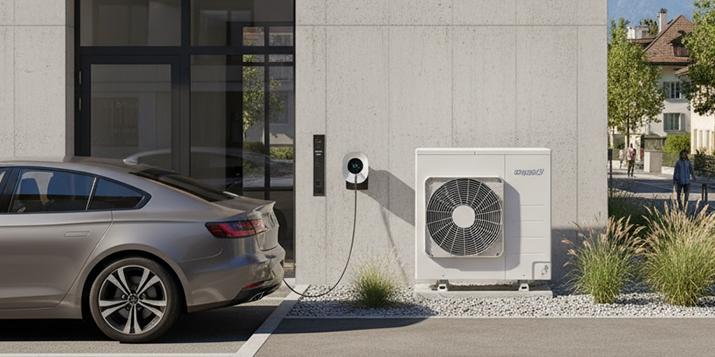
| | How can electric cars and heat pumps help Switzerland implement its energy strategy?
| |
| | In future, flexibly operated heat pumps and electric cars could reduce both electricity imports and electricity prices. That is according to a new study by a Swiss research consortium led by ETH Zurich. More | | | |
|
| | | 05.12.2025 Climate Justice: Scientific, Ethical, and Legal Dimensions
Conference, Bern ❯❯ | |
| | 05.-06.12.2025 23. Swiss Geoscience Meeting
Event, Bern ❯❯ | |
| | 11.12.2025 Digesting the 30th Climate COP in Belém
Event, Zurich ❯❯ | |
| | 23.01.2026 SPEED2ZERO
Event, Bern ❯❯ | |
| | 15.04.2026 26th Swiss Global Change Day
Symposium, Bern ❯❯ | | | |
|
|
|
|
|
| | IPCC: Call for Authors and Review Editors for the IPCC Methodology Report on CDR Technologies, CCUS for National Greenhouse Gas Inventories (Additional guidance)
| |
| | The IPCC is looking for Coordinating Lead Authors, Lead Authors, and Review Editors for the IPCC Methodology Report on Carbon Dioxide Removal Technologies, Carbon Capture, Utilization, and Storage for National Greenhouse Gas Inventories (Additional guidance). The deadline for nomination is 3 December 2025. More
| |
|
| |
|
|
|
| | IPCC: Call for Experts to Review the First-Order Draft of the 2027 IPCC Methodology Report on Inventories for Short-lived Climate Forcers
| |
| | The Intergovernmental Panel on Climate Change (IPCC) is looking for experts to participate in the expert review of the First-Order Draft (FOD) of the 2027 IPCC Methodology Report on Inventories for Short-lived Climate Forcers. Registration is open until 13 February 2026. More
| |
|
| |
|
|
|
| | Call for Abstracts: EGU26 Session on Global Environmental Change in Mountain Social-Ecological Systems
| |
| | The MRI and the Institute for Interdisciplinary Mountain Research at the Austrian Academy of Sciences welcome inter- and transdisciplinary contributions that examine past, present, and future environmental change, their associated impacts for ecosystems and people in mountain environments, and measures taken to address these impacts. Submission deadline for this EGU26 session is 15 January 2026. More
| |
|
| |
|
|
|
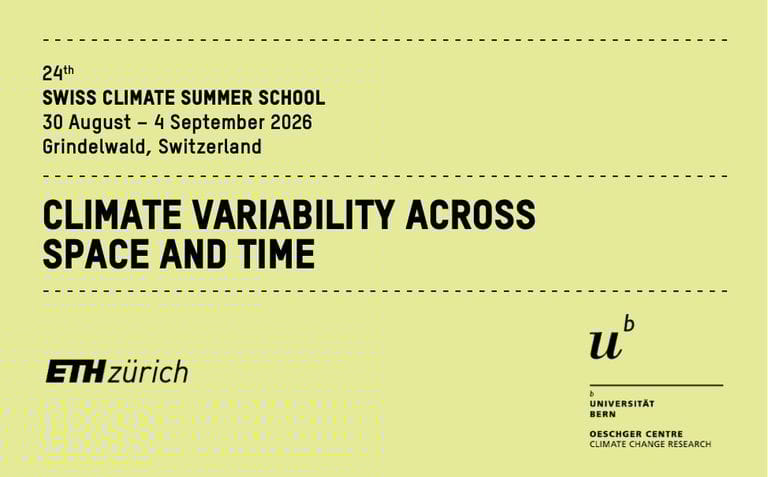
| | Call for Participants: 24th Swiss Climate Summer School 2026
| |
| | The network of leading Swiss institutions in climate research and education invites early stage scientists to join high-profile climate researchers in a scenic Swiss alpine setting for keynote lectures, workshops, poster sessions, and personal interactions on the occasion of the 24th Swiss Climate Summer School 2026. The deadline for applications is 15 January. More
| |
|
| |
|
|
|
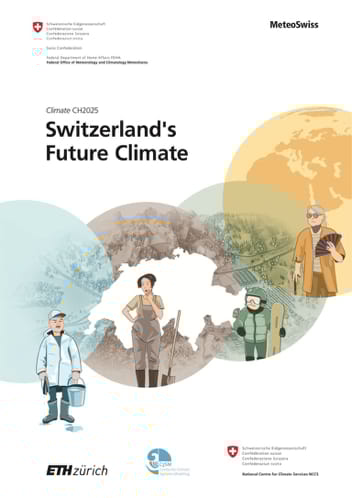
| | Climate CH2025: The climate future of Switzerland
| |
| | More extreme heat in summer, drier summers, less snow in winter, and increasingly frequent heavy precipitation: the consequences of climate change are becoming more severe and progressing rapidly. Swiss climate scenarios illustrate how and in which regions these developments are having an impact, and provide a more detailed look at the future climate of Switzerland. More
| |
|
| |
|
|
|
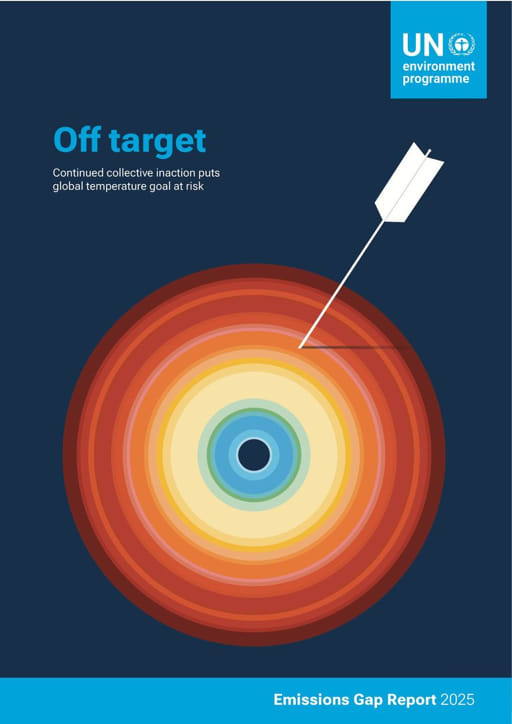
| | Emissions Gap Report 2025
| |
| | UNEP’s Emissions Gap Report 2025: Off Target finds that available new climate pledges under the Paris Agreement have only slightly lowered global temperature rise over the course of this century, leaving the world heading for a serious escalation of climate risks and damages. More | |
|
| |
|
|
|
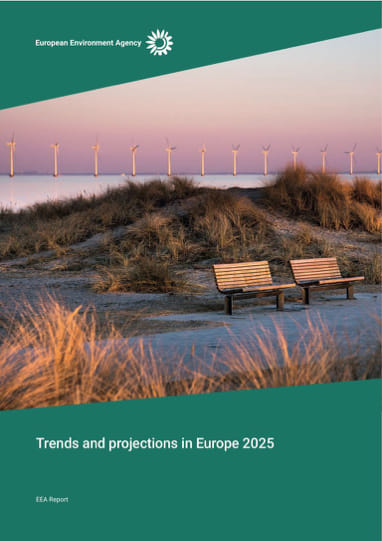
| | Trends and projections in Europe 2025
| |
| | This report explores the historical trends, most recent progress and projected future developments in climate change mitigation through reduced greenhouse gas emissions, renewable energy gains and improved energy efficiency. It builds upon data reported by all 27 European Union (EU) Member States, five European Environment Agency (EEA) member countries and nine Energy Community contracting parties. More
| |
|
| |
|
|
|
| | World Energy Outlook 2025
| |
| | The World Energy Outlook covers the whole energy system, using a scenario-based approach to highlight the central choices, consequences and contingencies that lie ahead. It includes exploratory scenarios that flow from different assumptions about existing policies, as well as normative pathways that achieve energy and emissions goals in full. The multi-scenario approach illustrates how the course of the energy system might be affected by changing key variables, including the energy policies adopted by governments around the world. More | |
|
| |
|
|
|
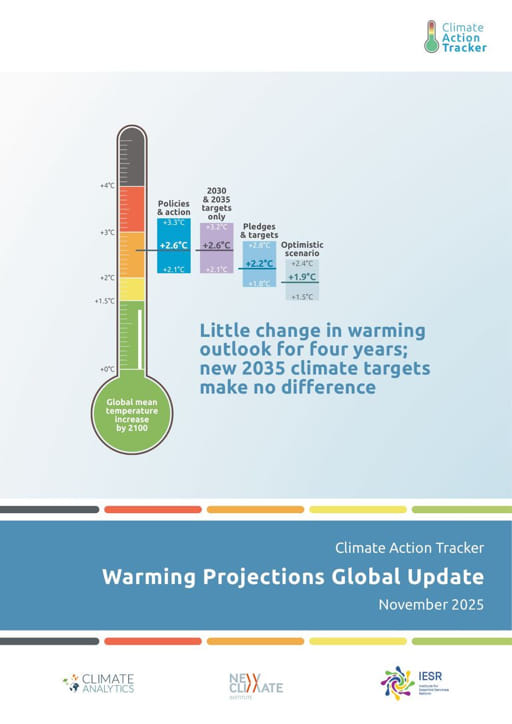
| | Warming Projections Global Update: Little change in warming outlook for four years; new 2035 climate targets make no difference
| |
| | Climate Action Tracker's global temperature projections based on this year’s policy developments and 2035 targets have almost come to a standstill: it has barely moved over the past four years. The warning signs are clear: the world is heading in the wrong direction. More | |
|
| |
|
|
|
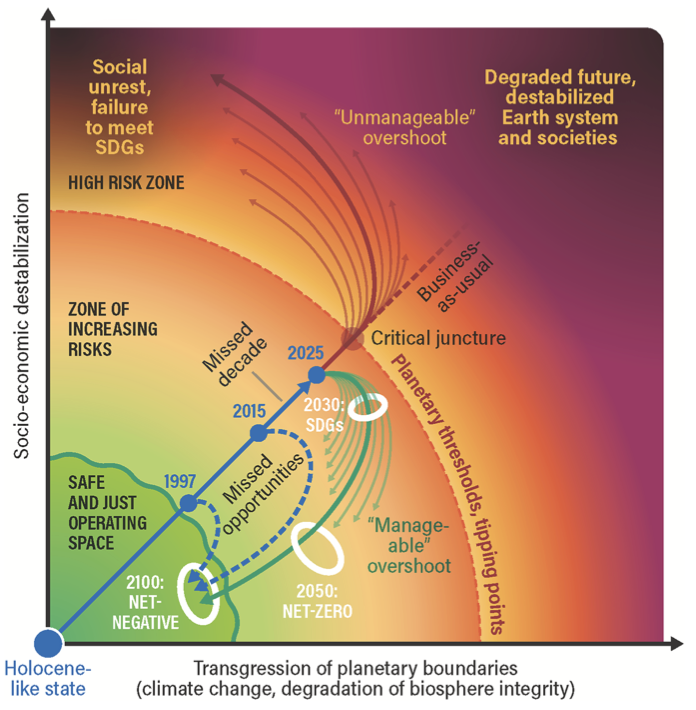
| | Fig. Past and possible future World-Earth system trajectories | | | |
|
| | | | | Research impulse of the month
Humanity faces its ultimate challenge due to its failure so far in addressing the escalating risks, which are pushing the world into a deepening crisis. We have to rapidly adopt new pathways that reduce negative impacts and optimize regeneration. Today, we exceed our planet’s capacity to sustain life, depriving billions of basic needs amid rising conflict. Yet, with collective will, we can bridge the gap between knowledge and action to safeguard life-support on Earth.
- J. Rockström, P. Schlosser, A. K. Bhowmik et al.Living beyond limits: Consequences of missing the decisive decade for preserving our planet’s life-supporting systems
| | | |
|
|
|
|
|
| |
Swiss Academy of Sciences (SCNAT) Forum for Climate and Global Change (ProClim) | |
|
|
|
|