| | Forum for Climate and Global Change (ProClim)
ProClim Briefing No 10
06.11.25 | |
|
|
|
| | Dr. Reto Burkard, member of the ProClim Steering Committee and Deputy Director and Head of the Climate Division at the Federal Office for the Environment (FOEN) | | | |
|
| | | Hello , CO₂ capture and storage is rapidly gaining in importance – but it must not be allowed to replace consistent emission reductions. Both are needed. The Climate and Innovation Act clearly establishes this principle: first avoid, then remove. The current issue of ProClim Flash impressively shows how complex the path to net zero is. New methods for reducing emissions or removing CO₂ from the atmosphere can only be effective if a clear legal framework provides planning security. Also, the necessary technologies must be widely accepted by society. Every tonne of CO₂ avoided strengthens the credibility of Swiss climate policy and relieves the burden on future generations. Technical progress opens up opportunities – but also harbours risks that need to be weighed up. We are already feeling the consequences of climate change today. More hot days, dry summers, heavy rainfall and less snow in the mountains, to name but a few. These climate risks require one thing above all else: We must act now. | |
 |
|
|
|
|
|
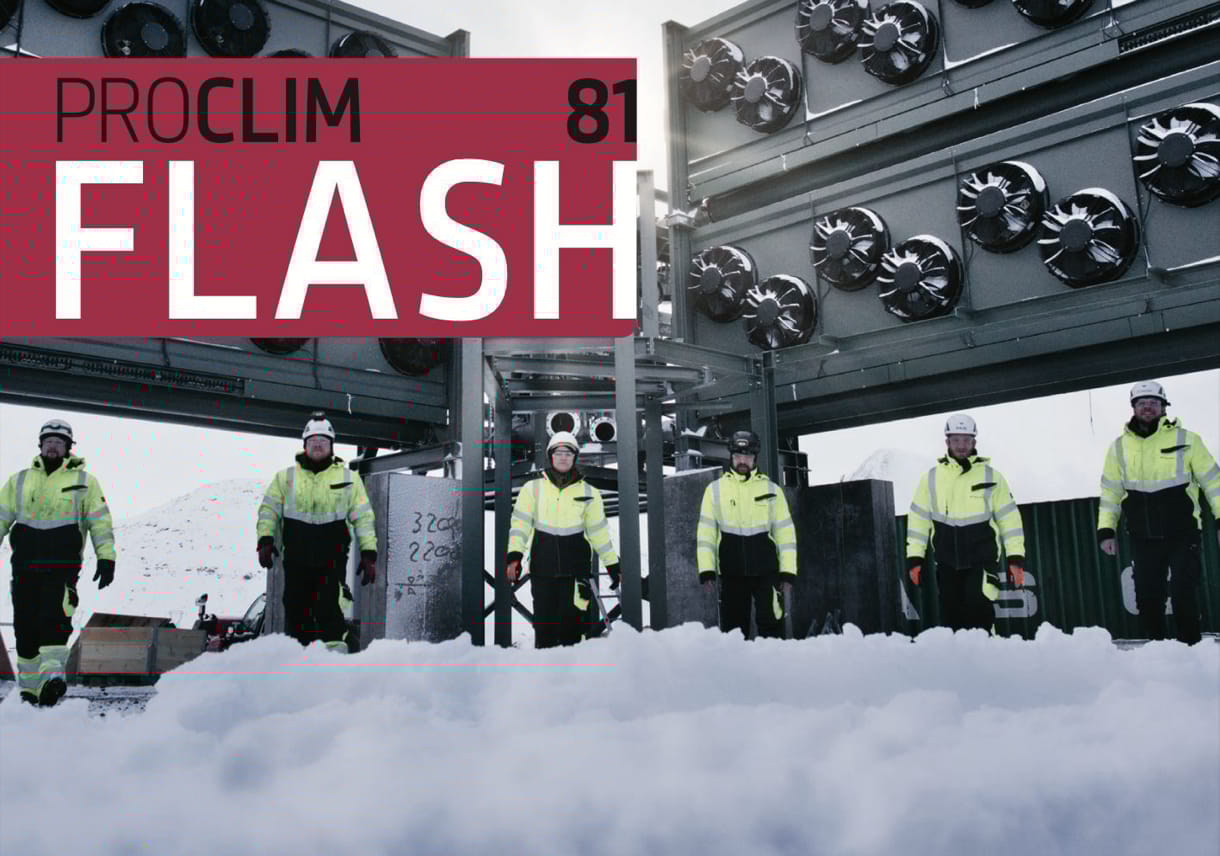
| | Flash 81: CO₂ capture and storage – current status and potential of new methods
How can CO₂ be removed from the air? What is the difference between carbon dioxide removal (CDR) and carbon capture and storage (CCS)? What roles do these technologies play in Switzerland's climate strategy? Reducing greenhouse gas emissions is essential. But one thing is clear: to achieve the goals of the Paris Climate Agreement, technologies for CO₂ removal and storage are needed. Flash 81 presents the current state of research and the potential of new methods. It also highlights legal and moral issues related to CO₂ removal and storage. More | | | |
| |  | | | |
| | Already over 1000 signatories
Experts from science, journalism, municipalities, and non-governmental organizations are calling for a change of course in climate communication. At the K3 Congress in Graz 2024, a call for signatures was launched. In addition to 80 prominent initial signatories, around 1,034 people have already joined. The Charter is now available in English and French as well. You can sign the Charter here. The guidelines serve as a key reference for ProClim’s climate communication activities and for preparations for the next K3 Congress, which is planned to take place in Germany in 2027. More
| |
|
|
|
| |
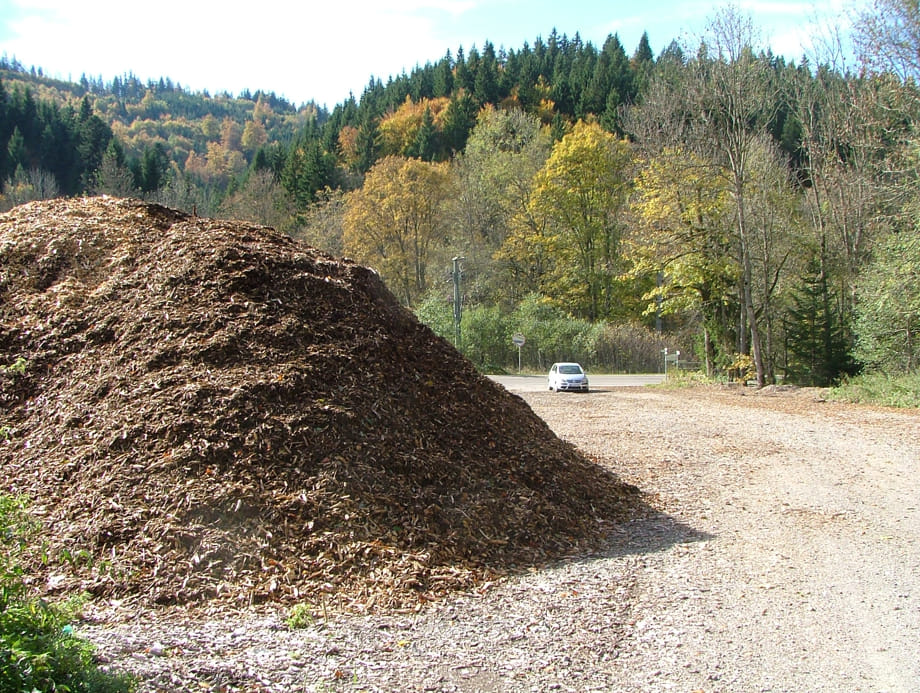
Biomass plays an important role in Switzerland's future energy and raw materials system. It can be used as a source of energy or carbon, but also for CO₂ sequestration. Read this Flash article to find out which application makes the most sense.
| |
|
| |
|
|
|
| | Switzerland’s future climate: Latest findings on climate change in Switzerland | |
| | Hot days, dry summers, heavy rainfall, and less snow – climate change is clearly noticeable in Switzerland as well. But how strongly does climate change affect Switzerland? The Climate CH2025 project provides well-founded answers about how Switzerland’s climate has changed so far and what further climatic changes can be expected. More | | | |
| | Essential research findings to support decision-making in a critical decade
| |
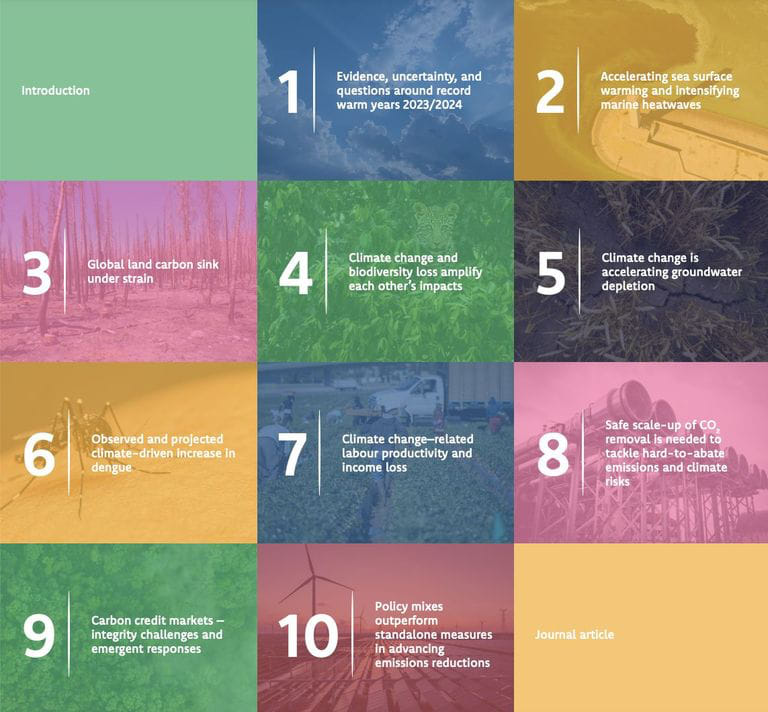
| | Each year, '10 New Insights in Climate Science' invite leading scientists from around the world to review the most pressing findings in climate change-related research, summarized into 10 concise insights. More | | | |
|
| | | 10.-14..11.2025 Energy Week @ ETH 2025
Event, Zürich ❯❯
| |
| | 21.11.2025 Symposium & General Assembly SGM 2025
Symposium, Zürich ❯❯
| |
| | 26.11.2025 Sustainability Science Forum 2025: Ensuring a just transition towards a net zero society
Symposium, Bern ❯❯
| |
| | 02.12.2025 Sustainable University Day
Symposium, Rapperswil-Jona ❯❯ | | | |
|
|
|
|
|
| | IPCC: Call for Experts to Review the First-Order Draft of the Special Report on Climate Change and Cities
| |
| | The Intergovernmental Panel on Climate Change (IPCC) is looking for experts to participate in the review of the First-Order Draft (FOD) of the Special Report on Climate Change and Cities (SR Cities). The review period will run from 17 October to 12 December 2025. Interested experts can register now on the IPCC website. Registration closes on 30 November 2025. More
| |
|
| |
|
|
|
| | Call for Abstracts: EGU26 Session on Global Environmental Change in Mountain Social-Ecological Systems
| |
| | The MRI and the Institute for Interdisciplinary Mountain Research at the Austrian Academy of Sciences welcome inter- and transdisciplinary contributions that examine past, present, and future environmental change, their associated impacts for ecosystems and people in mountain environments, and measures taken to address these impacts. Submission deadline for this EGU26 session is 15 January 2026. More
| |
|
| |
|
|
|
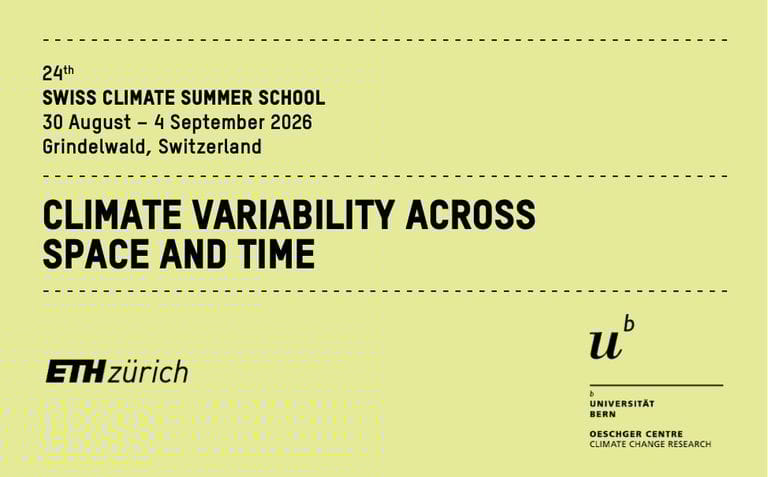
| | Call for Participants: 24th Swiss Climate Summer School 2026
| |
| | The network of leading Swiss institutions in climate research and education invites early stage scientists to join high-profile climate researchers in a scenic Swiss alpine setting for keynote lectures, workshops, poster sessions, and personal interactions on the occasion of the 24th Swiss Climate Summer School 2026. More
| |
|
| |
|
|
|
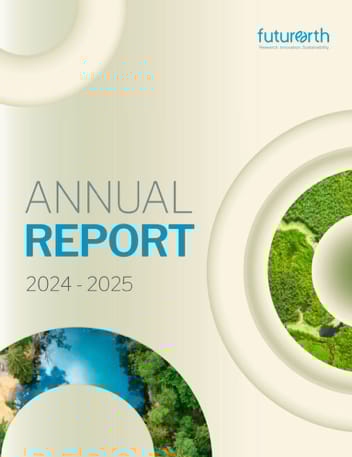
| | Future Earth’s 2024–2025 Annual Report
| |
| | 2024–2025 was a year of momentum, connection, and bold action. As environmental and societal disruptions intensified, Future Earth deepened its efforts to bridge science, policy, and local action. Across disciplines and continents, the network advanced knowledge, built partnerships, and elevated diverse voices working toward a more just and sustainable future. More
| |
|
| |
|
|
|
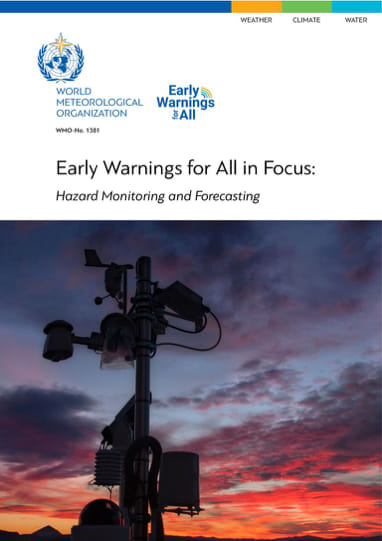
| | Early Warnings for All in Focus: Hazard Monitoring and Forecasting
| |
| | Launched by the UN Secretary-General, the Early Warnings for All (EW4All) initiative sets an ambitious goal: by 2027, every person on Earth will be protected by life-saving, multi-hazard early warning systems. This report presents how that vision is being turned into concrete progress under Pillar 2 of the Initiative, led by the World Meteorological Organization (WMO). Grounded in country-led priorities and powered by global partnerships, the report takes a deep dive into the systems that make early warnings possible – from observing networks and data exchange to forecasting, impact-based warnings, and governance. More
| |
|
| |
|
|
|
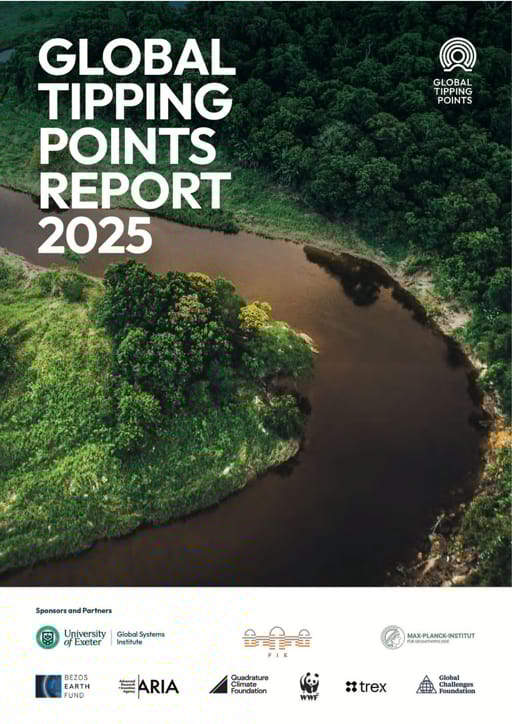
| | Global Tipping Points Report 2025
| |
| | According to a new report by 160 researchers, the widespread death of coral reefs marks the world's first climate tipping point that has already been reached. The Global Tipping Points Report 2025 identifies the growing risks to key Earth systems, from glaciers and ice fields to ocean currents, ice sheets and rainforests. The University of Exeter published the report in collaboration with the Potsdam Institute for Climate Impact Research (PIK) and 85 other institutions. More | |
|
| |
|
|
|
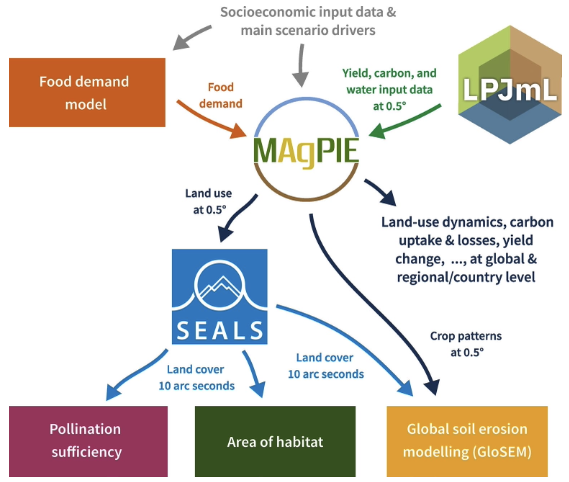
| | Fig. The MAgPIE-SEALS modelling framework, a broad range of socioeconomic and spatially-explicit biophysical information to simulate global land system dynamics in the 21st century. | | | |
|
| | | | | Research impulse of the month
Conservation benefits from dietary change arecommonly assessed without accounting fordifferent conservation objectives. Most diet-related conservation benefits are alreadyachieved by a partial shift to healthier diets.This is because, particularly in many countriesin tropical Africa and Asia, adopting healthierdiets would mainly involve substituting staplefoods with more varied plant-based foodsrather than replacing resource-intensivelivestock products. Any progress towardshealthier diets not only lowers greenhouse gasemissions but also reduces barriers toeffective conservation, such as higher foodprices and imports.
- P. von Jeetze, I. Weindl, J.A. Johnson et al. | | | |
|
|
|
|
|
| |
Swiss Academy of Sciences (SCNAT) Forum for Climate and Global Change (ProClim) | |
|
|
|
|